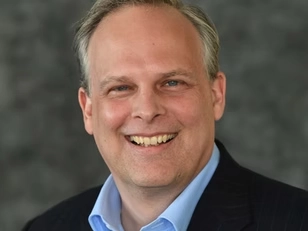
Shunundo Basu speaking at Global Venture Dialogue co-hosted by Urban Future Lab and Greennex Global during New York Climate Week 2025
In climate tech investing, early-stage capital has traditionally meant venture capital. But as the energy transition moves into high-need markets with fragile grids, complex regulations, and high infrastructure costs, a different type of first mover is defining the next wave of climate innovation: philanthropic capital.
The Rockefeller Foundation, one of the world’s most established charitable funders, has increasingly positioned concessional capital as a strategic tool for unlocking commercial investment in places where it rarely goes first. In his role as Director of Energy, Technology, and Innovation, Shunondo Basu helps steer the Foundation’s support for startups and entrepreneurs that benefit vulnerable communities across Southeast Asia, India, Africa, and Latin America – regions poised to drive the world’s demographic and economic growth over the next three decades. The Rockefeller Foundation views this work as essential to achieving universal energy abundance, where energy access is reliable and affordable for everyone regardless of where they live. When people in developing countries have access to power, research shows that it unlocks additional economic development – both at the local and national levels.
Rather than solely seeking good ideas, The Rockefeller Foundation seeks to fund ideas with the right conditions for impact. Basu emphasizes that in emerging markets, pre-commercial steps such as early validation, policy alignment, and risk removal aren’t a “nice-to-have”. Rather, they are the key enabling layer without which neither innovation nor private capital can safely scale to achieve universal energy abundance and improve people’s lives.
At the Global Venture Dialogue (GVD) convening two panels of global investors, Greennex Global and Urban Future Lab hosted Basu to discuss why homegrown climate solutions matter, what philanthropic capital uniquely unlocks in the Global South, and why the least glamorous technologies may be the most undervalued investment thesis of the decade, enabling development where it matters most.
The Rockefeller Foundation as a Crucial De-Risker in Emerging Markets
Basu describes the Foundation’s role in the capital stack in clear terms. “We have so many groups coming to us asking for our involvement,” he explains. “Philanthropic capital is very much a part of the capital stack because what we can do is de-risk certain things and make opportunities more viable for commercial investors, for the benefit of the larger community.”
In practice, that means the Foundation often steps in before traditional investors even have a category to underwrite. Through charitable grants, it supports concept validation, early pilot design, ecosystem mapping, and policy alignment—critical steps that seed-stage funds would find challenging to perform independently in emerging markets.
Homegrown Solutions, the Backbone of Scalable Climate Innovation
Asked why global startups matter, Basu offers a perspective bridging development economics and venture logic: environment-tailored technologies imported models. “One of the biggest pieces of thinking that comes out of The Rockefeller Foundation is that solutions that are homegrown and intended for the countries in which they are developed are often the most impactful,” he notes.
This ‘piece of thinking’ is not just moral or philosophical. The Global South will account for the majority of global population growth through 2050, with Africa alone projected to represent over a fifth of the world’s population. The fastest-growing energy demand and the most urgent resilience needs are concentrated in these regions, and new technologies must be crafted with the utmost attention to these considerations This is exactly why The Rockefeller Foundation is focused on achieving universal energy abundance. “The best thing is to have a global mindset and think about how the solution fits into the context of the Global South,” he explains. “These areas are very important, and it’s important that the solutions work in those spaces.”
Policy as the Ultimate Multiplier of Innovation
During the panel, Basu stressed that in many emerging markets, policy alignment can be determinative. He pointed to India as one example: “Some of the work we’re supporting there with a startup on power grids has gotten a lot of excitement from both the state and national government. Having the support of leaders has made a huge difference; it can really make or break an initiative.”
Philanthropic actors like The Rockefeller Foundation often serve as bridges toward this goal, validating technologies early enough that regulators are comfortable supporting them, while ensuring founders problem-solve within real-world constraints. Basu also describes timing as a strategic tool: “Sometimes the regulatory ecosystem is just against you, so it’s often about timing. Focus on what you can advance, and when the headwinds shift, that’s the moment to implement.”
What Rockefeller Looks for in Founders
Among the Foundation’s network of partners is Delta40, a Nairobi-based premier incubator working with entrepreneurs working on power and climate issues across Africa. Basu highlights one trait they cultivate that he believes defines strong early-stage founders everywhere: fast iteration. “They encourage entrepreneurs to iterate fast by running experiments and recognize when something isn’t working,” he explains. “Not shifting the whole idea, but going through prototypes quickly to speed up the innovation process.”
In emerging-market contexts where unit economics and infrastructure vary significantly even between cities, speed of learning is often more valuable than speed of user acquisition. Founders must be willing to refine, redesign, and recontextualize until the technology meets the systemic constraints of local communities.