By Greennex Global | March 2026
Japan Climate Gateway, hosted by the City of Yokohama, in collaboration with Greennex Global, and supported by Deloitte Tohmatsu Venture Support, connected U.S. deep-climate-tech companies with Japan’s industrial, corporate, and investment ecosystem. Four venture-backed startups presented breakthrough solutions spanning NASA-developed HVAC technology, commercial marine electrification, ultra-fast charging batteries, and AI-engineered plastic recycling—each demonstrating U.S. commercial traction and clear pathways for Japan market deployment.
Over 20 investors, corporate partners, and climate tech stakeholders from Japan and the U.S. joined the session, which featured opening remarks from Masahiro Nishikawa, Director of the Office of the City of Yokohama Representative to the Americas, and a fireside chat with Shaun Abrahamson, Managing Partner of Third Sphere.
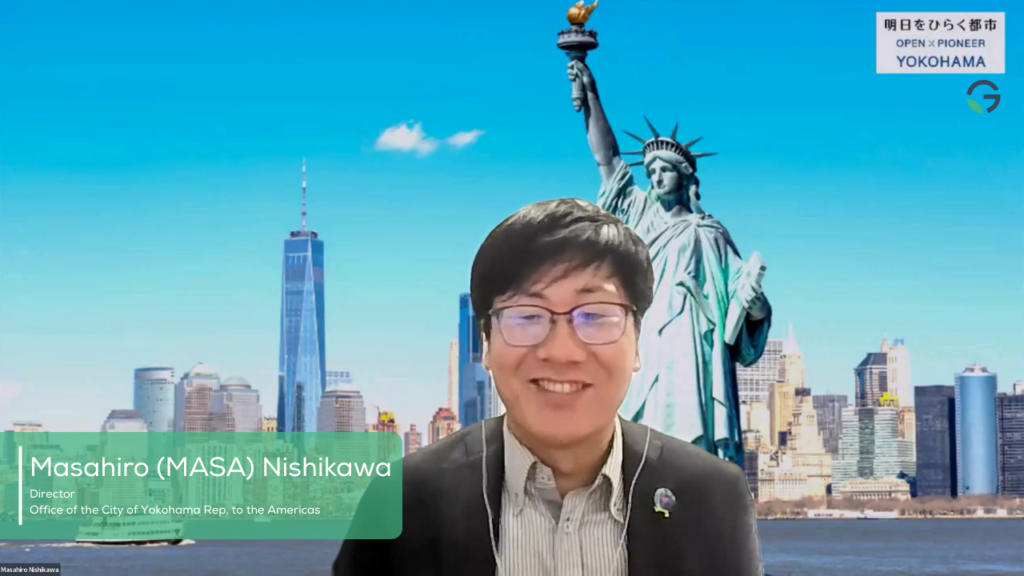
Opening Remarks: Yokohama as Japan’s
Climate Gateway
Masahiro
Nishikawa, Director of the Office of the City of Yokohama
Representative to the Americas, opened the session
with an overview of Yokohama’s role as a gateway city connecting global climate
innovation with Japan’s industrial ecosystem. Yokohama, Japan’s second-largest
city with 3.7 million residents located 30 minutes from Tokyo, hosts over 160,000
researchers and engineers and combines scale, livability, and innovation with a
long history of international collaboration.
Masa announced the launch of the
Yokohama Climate Tech Gateway Program, a year-long platform developed with
Greennex Global to connect U.S. East Coast climate tech startups with Japanese
investors and corporations. The program includes in-person events during New
York Tech Week, Climate Week NYC, and potentially CES in January, each bringing
together 50-80 curated participants. The City of Yokohama provides practical
support, including startup visits, POC opportunities, company establishment,
site selection, and bank account setup for U.S. startups entering the Japanese
market.

Investor Perspective: Reevaluating Climate Hardware Startups
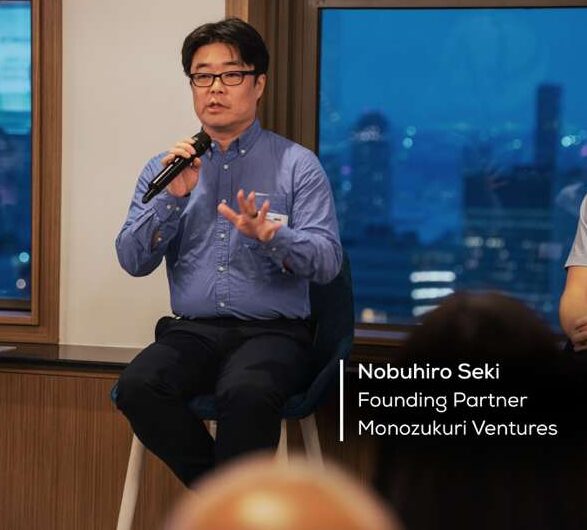
Shaun Abrahamson, Managing Partner of Third Sphere, provided insights on climate tech investment during a fireside chat. As a Pre-Seed and Seed stage climate-focused venture fund with a track record of over 100 portfolio companies, Shaun offered perspective on what makes climate technologies viable for industrial deployment and how U.S. startups can navigate Japan’s market dynamics.
Shaun identified deep tech as the strongest area of alignment between U.S. innovation and Japanese capabilities. “Currently, the U.S. aspiration in deep tech is more aspiration. The Japanese capability in deep tech is real,” he explained, noting that Japanese partners bring proven industrial depth and manufacturing expertise while U.S. startups offer innovation and capital. He advised corporates working with early-stage startups to set clear expectations around timing, noting that startups operate on 12-18 month funding cycles while industrial partners can plan in multiple years. On deployment strategy, he recommended starting with U.S. pilots when possible to reduce translation complexity before scaling to Japan.
Pitching Startups: Four U.S. Climate Solutions Ready for Japan Deployment
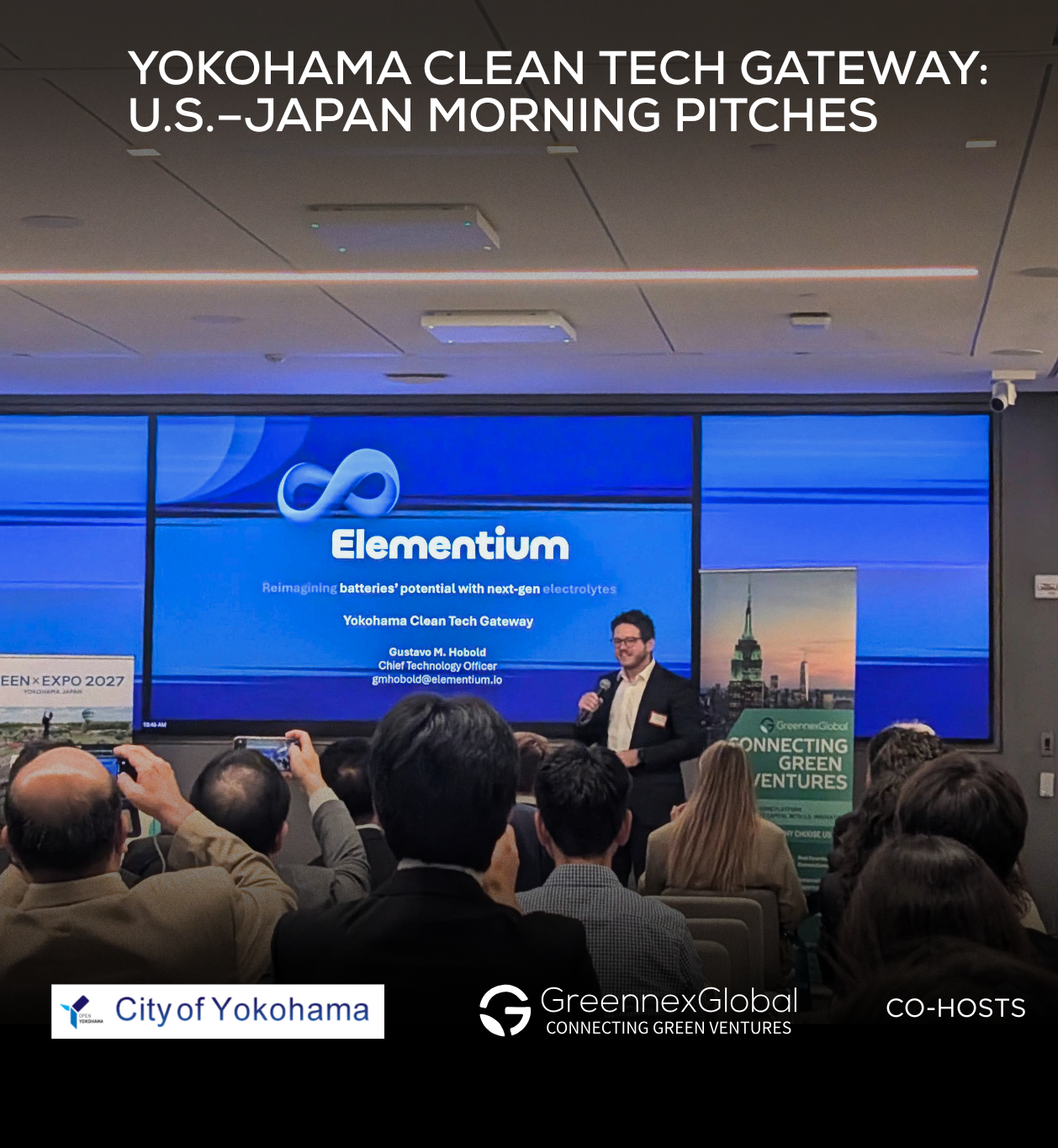
Each startup was selected for its demonstrated U.S. commercial traction, industrial relevance, and strategic fit for Japan’s market. Each company delivered a 5-minute pitch emphasizing deployment readiness and global expansion pathways.
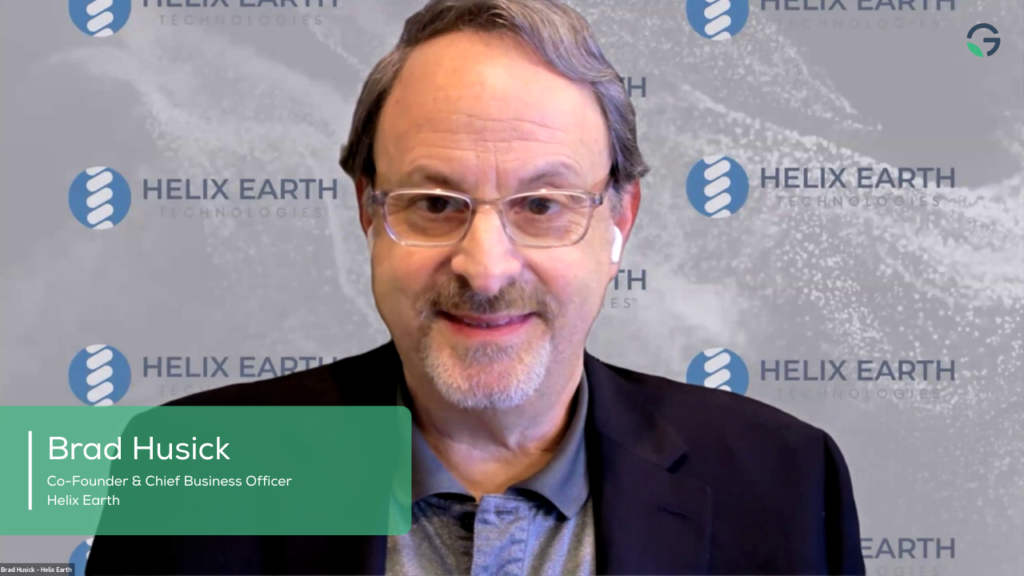
Helix Earth: NASA Space Technology for HVAC Decarbonization
Space-proven cooling · HVAC retrofit · Carbon capture
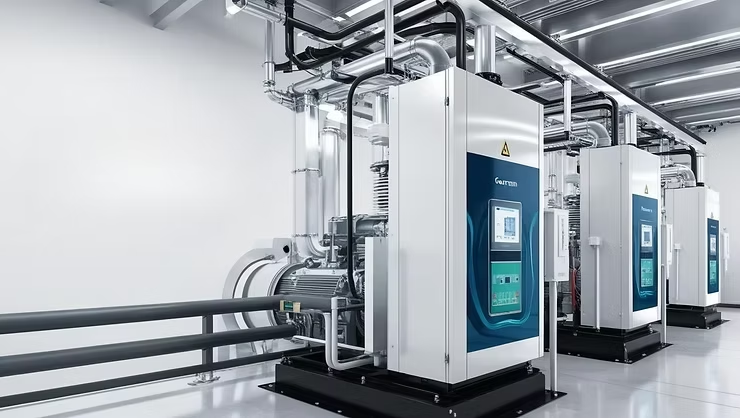
Helix Earth deploys NASA-developed space technology to decarbonize the built environment through breakthrough HVAC retrofit solutions and carbon capture systems. Founded by CEO Dr. Rawand Rasheed, who spent over five years at NASA Johnson Space Center developing life support systems for the Orion spacecraft, alongside serial entrepreneur Brad Husick, the Houston-based startup has developed a proprietary solid-state droplet filtration method using helical channels and centrifugal forces originally designed for firefighting in space. The technology addresses a critical inefficiency: up to 80% of the energy used in air conditioning systems is wasted on dehumidifying the air rather than cooling it. By separating humidity removal from cooling, Helix Earth’s retrofit device delivers 30-50% year-round energy reduction, installs in less than one day, and costs four times less than competing liquid desiccant systems. Named to Forbes 30 Under 30 in Energy, the company has raised $7.3 million in venture funding and $2.3 million in non-dilutive support from NSF and DOE, with pilot deployments underway in commercial buildings. Brad Husick emphasized a long-term approach to Japan partnerships: “The most successful partnerships come from satisfying a real business requirement and proving you can do exactly what you say you do. We’re not in a super rush to make things happen tomorrow. We need to establish the right partnerships and trust.”

Photon Marine: Electric Propulsion for Commercial Workboats
Electric marine propulsion · Workboat electrification · Fleet management software
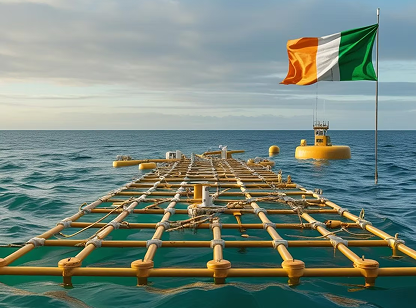
Photon Marine electrifies the commercial marine industry with high-performance electric propulsion systems and intelligent fleet management software designed for demanding workboat operations. Founded in 2021 by CEO Marcelino Alvarez and CTO Nick Schoeps, an electric motorsports pioneer, the Portland-based company develops 300-horsepower peak outboard motors paired with scalable battery packs. Leveraging incentives on the U.S. West Coast, Photon’s systems cost less than gas outboards in California and Washington, enabling the company to book over $5 million in revenue over the last 12 months with partners including the New York Power Authority, Port of Detroit, and Scripps Institution of Oceanography.
Marcelino positioned Japan as a natural market: “It’s an incredibly maritime country with thousands of coastal vessels operating in short-range harbor environments where electric propulsion works best.” He noted alignment with Japan’s Carbon Neutral Ports program, in which ports such as Yokohama and Kobe are actively exploring harbor decarbonization. The company is raising a $2 million seed bridge round to close a finance facility, finalize production tooling, and open an Asia office, with term sheets for a Singapore-based Asia SPV.

TyFast: Ultra-Fast Charging Batteries for Heavy-Duty Applications
Lithium vanadium oxide anode · Construction & mining · Defense applications
TyFast has developed lithium vanadium oxide (LVO) anode technology that enables ultra-fast charging and extended cycle life for heavy-duty lithium-ion batteries targeting construction, mining, trucking, and defense applications. Founded in 2021 by CEO Dr. G.J. la O’, who brings over a decade of energy storage commercialization experience from Primus Power, along with UC San Diego co-inventors Dr. Haodong Liu (CTO) and Professor Ping Liu (CSO), the technology replaces conventional graphite anodes (99% sourced from China) with domestically-sourced vanadium-based materials to achieve 10x faster charging with full charge in under 10 minutes, over 10,000 charge-discharge cycles, and enhanced cold-weather performance.
GJ presented case studies demonstrating the value proposition: for Cummins on-highway trucks, LVO technology enables rapid uptime comparable to diesel and 10-year durability versus expensive battery pack replacements every 3-5 years with standard lithium-ion. For mining applications where electrified trucks can save $1 million in fuel per truck per year, LVO enables on-road charging without stopping and cycle life to meet 24/7 operation demands. Backed by the U.S. Department of Energy’s ARPA-E program ($2.8M award) and partnered with Taiwan’s GUS Technology for GWh-scale manufacturing, TyFast is raising a $10 million seed round to scale to industrial pilot capacity and convert JDAs with leading truck and mining OEMs into design wins.

Birch BioSciences: AI-Engineered Enzymes for Plastic Recycling
Generative AI · Enzymatic recycling · Virgin-quality polymers
Birch BioSciences engineers high-performance enzymes through generative AI and synthetic biology that break down plastic polymers into virgin-quality building blocks, enabling a truly circular plastic economy. Founded in Portland in 2021 by Johan Kers (15 years at Absci and Ginkgo Bioworks), Dr. Emily Duncan (10+ years protein biochemistry), and Dr. Miles Gander (AI-driven enzyme engineering expert), the Y Combinator-backed startup uses proprietary high-throughput screening and generative AI to create molecular scissors that depolymerize plastics like PET and polyurethane at low temperatures. The process is cost-competitive with both mechanical recycling and virgin fossil fuel-based plastics while reducing greenhouse gas emissions by over 70%.
Johan demonstrated the technology’s simplicity: plastic packaging dissolves in hot water over 24 hours, releasing chemical monomers that can be recovered and reused. The company has evolved naturally occurring enzymes to improve activity by more than 450-fold. On cost competitiveness, Johan explained: “We use dirtier feedstocks. We don’t have to remove labels and lids, so we tolerate 10-15% impurities while reaching cost parity. This is like a brewery-distillery concept for plastic recycling.” Currently at a 50-liter scale with greater than 90% yield, Birch is scaling to a 5,000-liter pilot plant (1 ton per day) by year-end. Supported by over $1M in grants from NSF, DOE, DARPA, and AWS, the company has raised $6.5 million to date and is raising a $5 million round for commercialization and pilot plant construction.
What This Roadshow Revealed
The session demonstrated a consistent theme across all four companies: leveraging advanced U.S. R&D capabilities to create commercially deployable solutions that integrate into existing industrial systems rather than requiring entirely new infrastructure.
Shaun Abrahamson’s fireside chat framed the strategic opportunity: Japanese industrial depth and manufacturing capability, combined with U.S. innovation and capital, create a natural alignment, particularly in deep tech, where “the U.S. aspiration meets Japanese execution capability.”
The startups showcased represent deployment-ready technologies with proven commercial traction, not early-stage concepts. Each company is past the pilot phase with actual customers, revenue, or signed agreements, addressing Shaun’s point that founders should “satisfy a real business requirement and prove you can do exactly what you say you do” before pursuing international partnerships.
Questions from Japanese participants focused on practical deployment pathways, manufacturing partnerships, and pilot opportunities, rather than theoretical market potential, indicating a serious strategic interest in bringing these technologies into Japan’s industrial ecosystem.
What’s Next
The Yokohama Climate Tech Gateway Program continues throughout 2026 with 4 online webinars and 3 in-person events during New York Tech Week (June 1st), Climate Week NYC (September 21st) and CES (Jan 2027), connecting U.S. East Coast climate tech startups with Japanese investors and corporations through year-long community engagement.
For startups building climate infrastructure solutions with demonstrated U.S. commercial traction and readiness for deployment in the Japanese market, this is where strategic capital and cross-border partnerships converge.
Startups: Apply to pitch at Greennex Climate Gateway
Investors: Contact us at info@greennexglobal.com
Greennex Global is a cross-border market intelligence and dealflow platform focused on climate infrastructure. Greennex Climate Gateway is our flagship government-backed program connecting U.S. climate tech startups with international deployment infrastructure and strategic capital.
Let’s keep building the bridge between global capital and climate innovation.