Cross-border climate innovation: EV Infrastructure, Circular Plastics, Carbon Capture, Green Data Centers, and Water Treatment
By Greennex Global, January 2026
Event Summary: The January edition of the Greennex Pulse Roadshow, co-hosted with Enterprise Singapore, connected U.S. climate deep tech companies with Singapore-based investors, government partners, and ASEAN deployment infrastructure. Six venture-backed startups presented solutions spanning EV charging infrastructure, chemical plastics upcycling, industrial carbon capture, hydrogen-powered data centers, and PFAS water treatment, each demonstrating U.S. commercial traction and clear pathways for regional expansion.
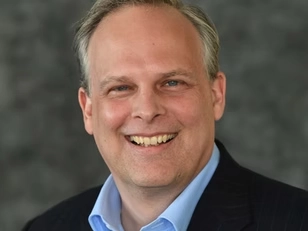
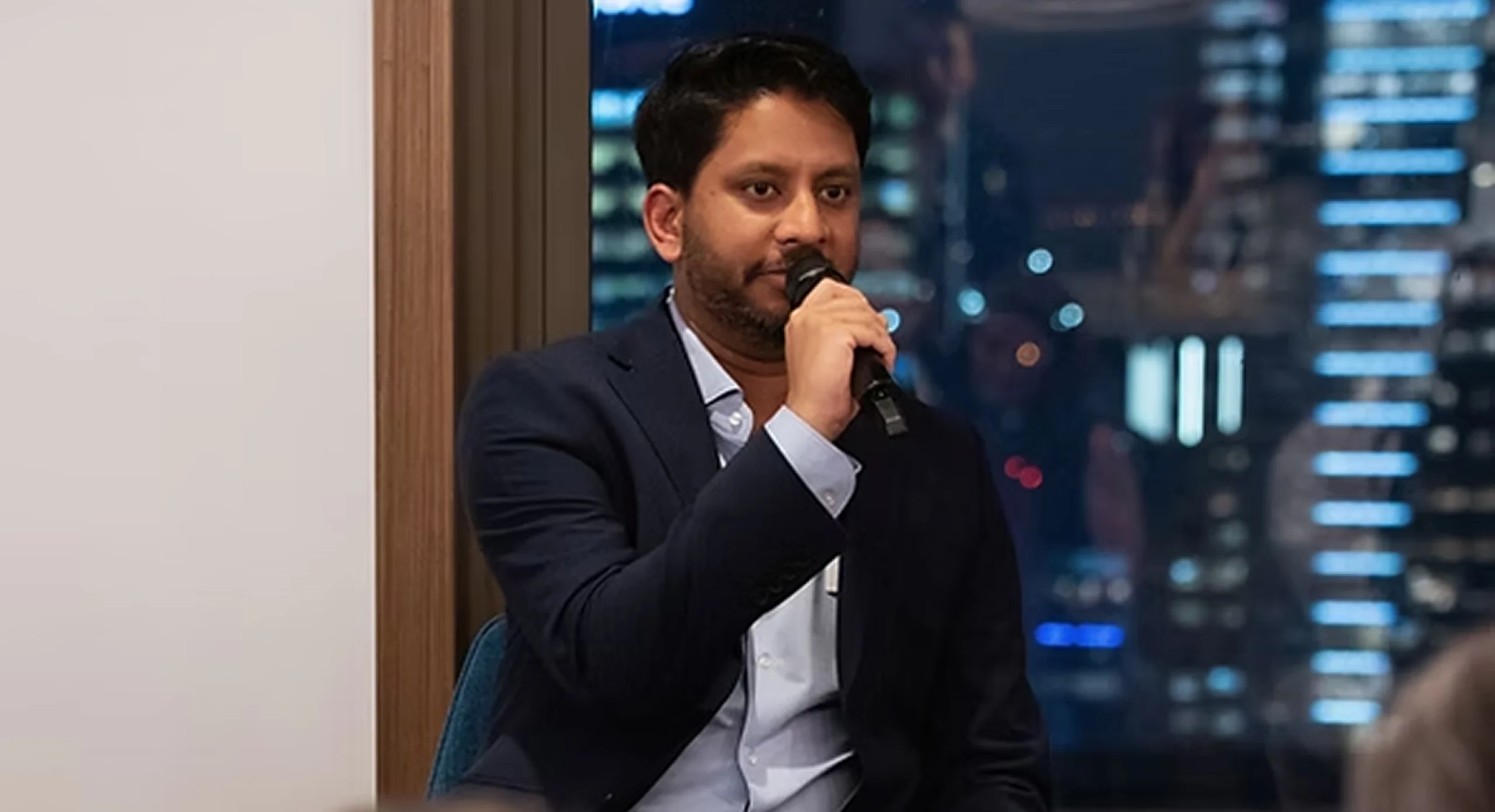
Over 22 investors, corporate partners, and climate stakeholders from Singapore and the broader ASEAN region joined the session, which featured opening remarks from Darren Lee Cheng Loong, Regional Director for East US & Canada at Enterprise Singapore, and Soman Velani, Co-founder & Managing Partner of Streetlife Ventures.
Opening Remarks: Singapore’s Climate Priorities and Urban Infrastructure Investment
Darren Lee Cheng Loong, Regional Director for East US & Canada at Enterprise Singapore, opened the session with insights on Singapore’s strategic climate priorities, government incentives, and deployment pathways for U.S. climate technologies entering Singapore and the broader ASEAN region.

While Singapore is smaller than New York City, it is a leader in global climate efforts and home to more than 4,500 startups across 30 sectors, with StageOne by Startup SG providing founders a launchpad and partner in Asia. Singapore continues to heavily invest in green infrastructure and carbon reduction initiatives, creating unprecedented opportunities for climate tech startups ready to scale across Asia.
Darren highlighted key sectors driving climate innovation: maritime and port operations accounting for one-third of global bunkering, aviation with 70 million air passengers in 2025, and chemicals as a top five chemical hub globally. Singapore remains committed to climate leadership with a net-zero emissions goal by 2050, emissions reduction targets to reduce greenhouse gas emissions to around 60 million tonnes by 2030, and a carbon tax aimed at SDG 50-80 per tCO2e by 2030.
He shared examples of innovation and collaboration already underway, including Amperresand and PSA International piloting solid-state transformer technology as part of PSA’s charging facilities for electric prime movers, and Aether Fuels partnering with Aster to co-develop a next-generation commercial-scale SAF production facility in Singapore, producing up to 50 barrels of fuel per day
Sonam Velani, Co-founder & Managing Partner of Streetlife Ventures, followed with a keynote on investing at the intersection of cities and climate, noting that 90% of climate risk is concentrated in cities and that the climate tech ecosystem in the U.S. is scaling across three areas: energy as virtual power plants and grid solutions, heat pumps and data centers, and adaptation and resilience tools for utilities and cities.

She emphasized that investment opportunities are strongest when spending is recurring, regulated, and structured around long-term contracts, with data centers scaling faster than electricity supply and requiring innovation in power and storage, load flexibility, cooling and thermal systems, and grid infrastructure. Velani outlined adaptation trends in the U.S. centered on keeping people at the center of decision-making: first, understanding risk through software solutions that map the financial costs of climate impacts; second, materials and hardware solutions addressing physical risks; and third, economic and social tools that bridge the gap between knowing the risk and taking action.
The Pitching Startups:
Each startup was selected for its U.S. commercial traction, strategic relevance to Singapore and ASEAN markets, and readiness for cross-border deployment. All six companies that presented demonstrated strong traction within the U.S., backing from well-known investors and industry leaders, and support from scientists with deep expertise in their respective fields.
Voltpost: Lamppost EV Charging Infrastructure
Modular EV charging, Existing infrastructure retrofit, Urban mobility

About: Voltpost retrofits existing lampposts into modular Level 2 EV charging stations for curbside and parking lot use. Founded by Luke Mario and Jeffrey Prosserman, Voltpost’s first-of-a-kind platform in the U.S installs in under one hour with no construction, trenching, or extensive permitting, reducing deployment costs by 25-85% compared to standalone chargers.
The company’s integrated retractable cable management system, featuring safety features and mobile connectivity, addresses urban charging deserts across New York, California, Michigan, Illinois, Connecticut, and Massachusetts. Backed by Michigan Mobility Funding Platform, NYSERDA, and NYC Economic Development Corporation, Voltpost is democratizing EV charging access for multi-unit housing residents and underserved communities while enabling future smart city applications, including 5G, air quality monitoring, and multi-modal services.
MacroCycle Technologies: Chemical Plastics Upcycling
Ring-opening polymerization, Circular plastics, Virgin-grade polymers

MacroCycle Technologies converts plastic waste into virgin-grade polymers using ring-opening polymerization technology that preserves molecular chains rather than breaking them down. Founded in 2023 by MIT researchers Jan-Georg Rosenboom and Steward Pena Feliz, MacroCycle’s chemistry-agnostic process achieves 80% lower energy consumption and 50-75% lower capital investment than traditional recycling methods.
The company converts PET bottles and polyester textiles into high-quality mPET resin with zero carbon emissions, targeting the cosmetics, textiles, and fast fashion industries. Backed by Clean Energy Ventures, Volta Circle, and Breakthrough Energy Fellows, MacroCycle has raised $6.5M in seed funding and is raising Series A later this year. As chemical innovators rather than facility builders, the company can move faster, cheaper, and make an impact faster than traditional approaches.
Mantel Capture: Molten-Salt Carbon Capture
Industrial carbon capture, Molten borate system, Heat recovery

Mantel Capture has developed the first molten-salt carbon capture technology that operates at high temperature inside boilers, kilns, and furnaces, enabling highly efficient CO2 capture directly at industrial emission sources. Founded in 2022 by CEO Cameron Halliday, COO Danielle Rapson, and CTO Sean Robertson as an MIT spin-out from the Department of Chemical Engineering, Mantel’s molten borate system captures 95% of CO2 emissions while recovering high-grade heat during absorption to offset regeneration energy.
Their technology reduces capture costs by more than 50% compared to conventional amine-based systems. Mantel has raised $32M, backed by Shell Venture, Eni Next, bp Ventures, Vale Ventures, The Engine, and New Climate Ventures. Mantel’s standalone add-on system addresses decarbonization challenges across cement, steel, pulp and paper, power generation, oil and gas, data centers, and chemical manufacturing in North America and globally. When paired with waste-to-energy and pulp and paper facilities, the technology enables biogenic carbon removal for net-negative emissions and permanent geological storage.
EdgeCloudLink: Hydrogen-Powered Off-Grid Data Centers
Green hydrogen fuel cells, Modular data centers, Zero-carbon AI infrastructure

EdgeCloudLink (ECL) develops modular, off-grid data centers powered by green hydrogen fuel cells, enabling sustainable AI and cloud infrastructure deployable anywhere without grid connection or local water sources. Founded in 2022 by CEO Yuval Bachar, former Principal Engineer at LinkedIn, Microsoft, and Facebook, ECL’s data center-as-a-service platform achieves zero carbon emissions and a PUE (Power Usage Effectiveness) of 1.05 while reducing deployment costs by 30-40% and construction timelines from 18-24 months to 6-9 months
The company has raised $17M, backed by Molex Ventures and Hyperwise Ventures. ECL is fast-growing and building flexible grid solutions that run on hydrogen and are in production, combining on-grid and islanded off-grid power with AI-ready cooling, including liquid cooling and direct-on-chip capabilities. The company’s 100% sustainable sites achieve PUE under 1.1 with Tier IV 99.9999% uptime, suitable for AI factories and inference edge deployments. ECL is developing the 1 GW TerraSite-TX1 project in Texas and enabling customers like Cato Digital and Lambda to scale GPU-intensive workloads with network-as-a-service connectivity.
Onvector: Plasma-Based PFAS Water Treatment
Plasma vortex technology, PFAS destruction, Advanced oxidation, Non-chemical water treatment

Onvector destroys PFAS and other contaminants using proprietary Plasma Vortex systems that harness arc-type plasma in cyclonic flow reactors. Founded in 2012 by CEO Daniel Cho, who brings over 15 years of experience in non-chemical water treatment, Onvector’s advanced oxidation and disinfection processes are more robust than ozone or UV-based systems. The company’s energy-efficient plasma technology breaks down PFAS molecules into harmless byproducts like fluoride, sulfate, CO₂, and water without fluorinated emissions. With $2.5M in seed funding and a $900,000 U.S. Army Corps of Engineers contract, Onvector is the only PFAS destruction technology that is low-cost and low-energy. The company is raising Seed 2 ($5M) and is positioned to destroy PFAS across a large and growing destruction market: $160B+ TAM in U.S. PFAS contamination across 5,700 U.S. sites and 137,000 global potential PFAS locations, with $2B TAM in environmental services including AFFF fire-fighting foam applications.
CarbonQuest: Building-Integrated Carbon Capture
Modular building retrofit, Boiler & generator capture, Thermal energy recovery

CarbonQuest develops building-integrated carbon capture systems that retrofit onto existing boilers and generators in commercial and multifamily buildings to capture CO₂ at the point of emission, liquefy it onsite, and deliver it for permanent sequestration or beneficial reuse, while recovering thermal energy for building operations. Founded in 2015 by CEO Shane Johnson, CarbonQuest’s containerized CQ™ systems capture 500–1,500 kg of CO₂ per day per installation, reduce building energy costs by 5–20%, and provide carbon capture at under $200 per ton, compared to $600+ per ton for traditional direct air capture.
CarbonQuest has secured $20M in funding to scale deployment and is operating across commercial real estate, affordable housing, hospitals, universities, and district energy systems, with projects in New York City, including Sendero Verde, Washington DC, and expanding nationally. Unlike centralized DAC facilities, CarbonQuest embeds permanent carbon removal directly inside buildings, addressing scope 1 emissions at the source and enabling 18–24-month payback periods through thermal energy savings and carbon revenue.
What This Roadshow Revealed
This session demonstrated the growing alignment between U.S. climate innovation and ASEAN deployment infrastructure, with Singapore serving as a strategic gateway for technologies addressing urban electrification, industrial decarbonization, and climate resilience. All six companies presented demonstrated not only strong U.S. commercial traction but also backing from well-known investors and strategic partners, validation from industry leaders and scientists with deep domain expertise, and clear pathways for international deployment.
The conversation revealed several emerging themes: companies that can move faster by focusing on innovation rather than infrastructure buildout are attracting investor interest, solutions addressing recurring and regulated spending with long-term contract potential are prioritized, and technologies that keep people at the center of climate decision-making are gaining traction in both U.S. and ASEAN markets.