Third Spheres’ Managing Partner on Evaluating Hardware Startups, the Return of Industrial Capability, and Building the World Beyond Climate Change
By Greennex Global | March 2026
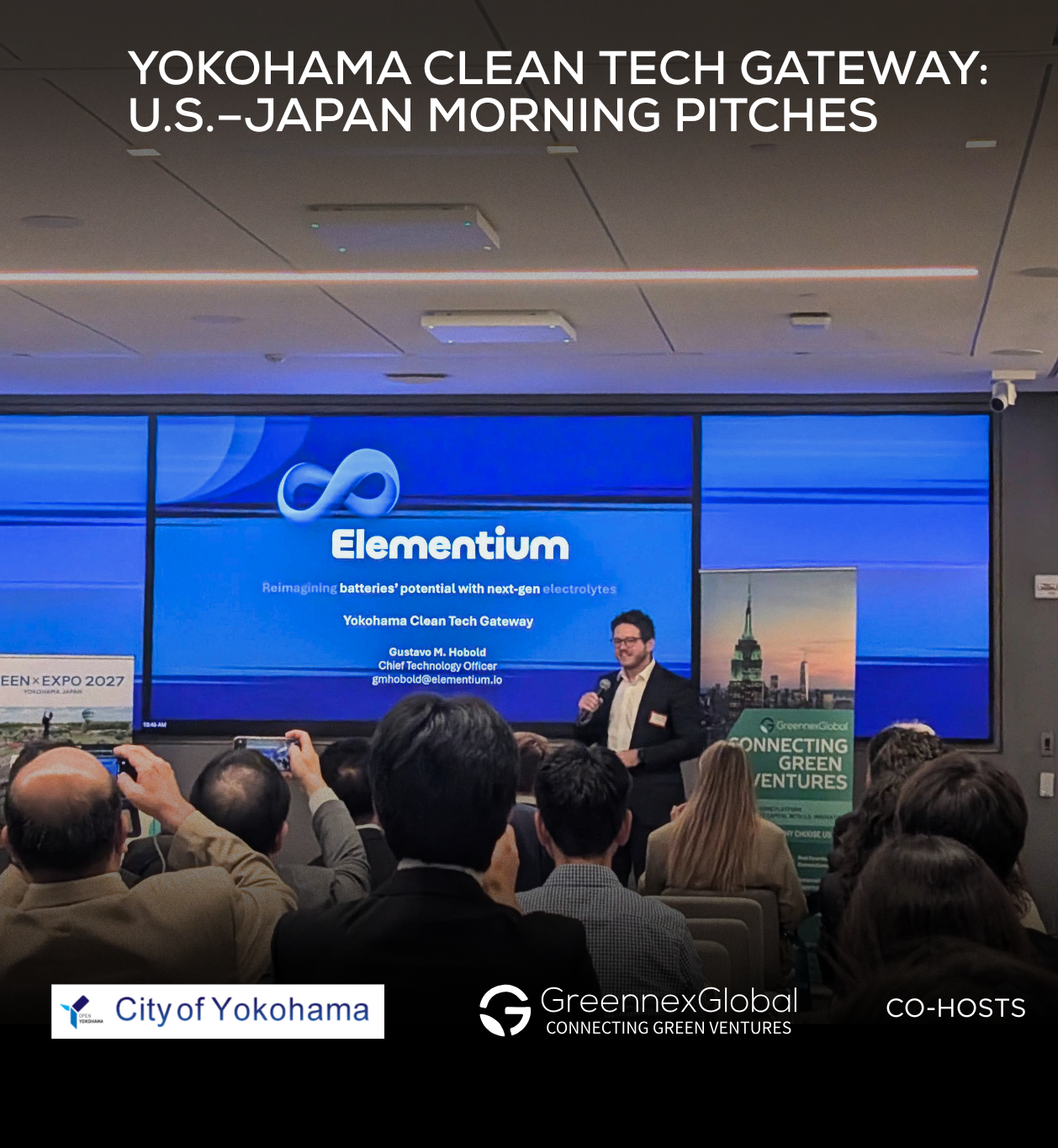
At the Greennex Japan Climate Gateway, the conversation centered on a practical question for climate tech investors and corporates: how do you evaluate hardware startups beyond technical feasibility, and what makes U.S.-Japan partnerships particularly well-suited for deep tech deployment?

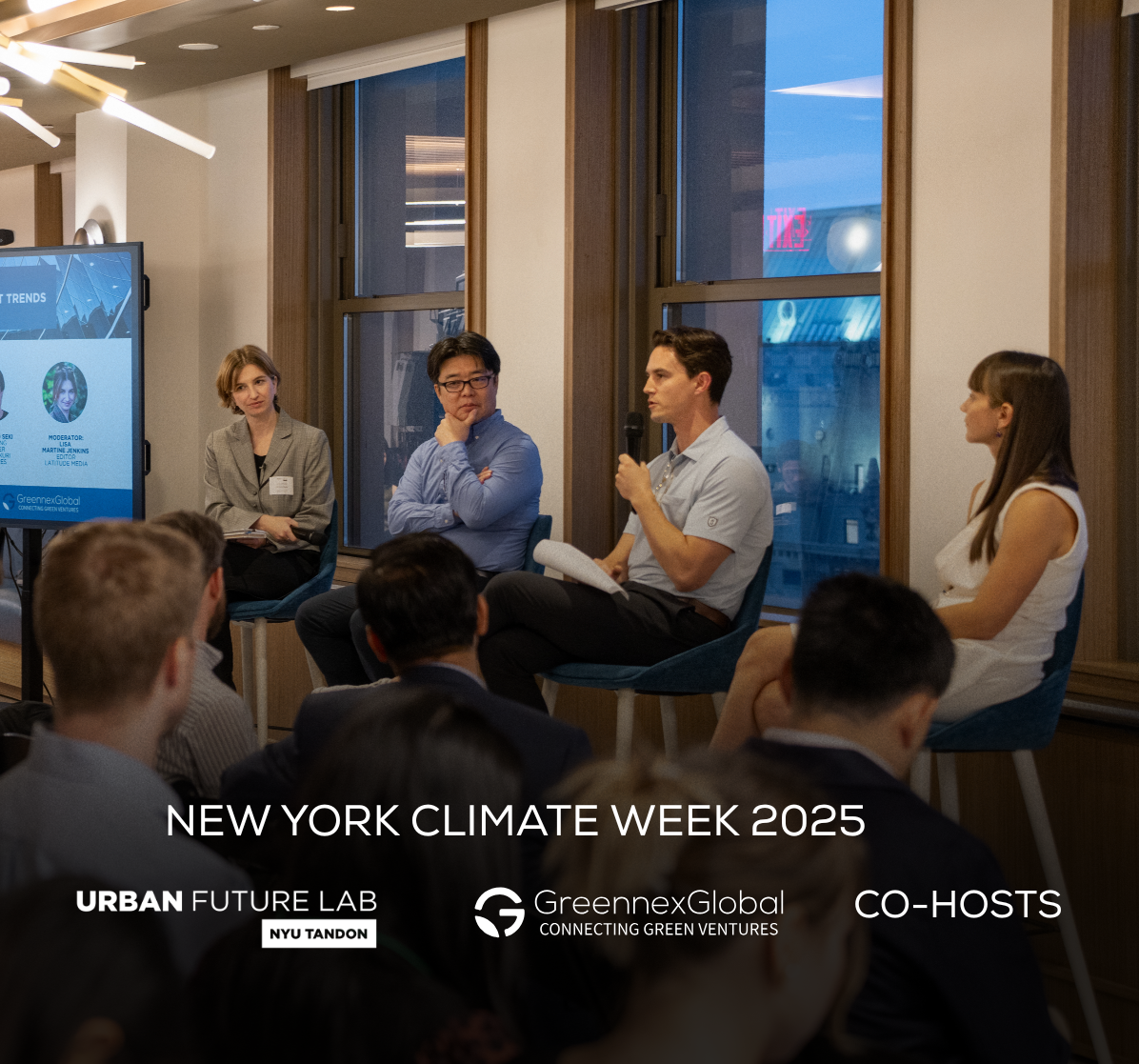
Shaun Abrahamson, Managing Partner of Third Sphere, shared his perspective on what makes climate technologies viable for industrial scale during a fireside chat at the roadshow. With a track record spanning more than 100 portfolio companies, prior angel investments in 20+ firms, including 3 unicorns (ZocDoc, Public, Trialpay), and climate modeling work at MIT’s CADLab, Shaun brings nearly three decades of experience connecting innovation with execution.
Beyond the Deck: What Actually Signals a Hardware Startup Can Scale
Greennex Global: Beyond technical feasibility, what are the most critical signals you look for when evaluating climate hardware startups?
Shaun Abrahamson: The most important first question for us is usually: when the team goes to sleep at night, is there someone making their product better? That usually means there are core components of what they’re building that come from key suppliers.
One way to figure that out is to check whether there is a logo from a large partner in their deck that is providing something. If you went through their bill of materials, you would see this is probably one of the most critical, often the most expensive things in what they’re building. That’s the shorthand for us to say the team is not trying to build everything. Still, they have an advantage: if they start building today, over time, this thing will get better, faster, and cheaper.
After that, we have some thoughts about whether something is a construction project or a manufacturing project. That’s shorthand for understanding how much productivity we can expect to improve. If you think about solar, the PV part is getting cheaper. The permitting costs for solar haven’t gotten cheaper. One thing got 10 times better, and during that period, maybe permitting got twice as good. We’ll think about what you need to deploy.
The last thing: customers should buy because they want the best product. We don’t really expect customers to want to save the planet. I know that sounds very sad, but I think it’s a little bit different in Japan. Japanese corporates are more sincerely engaged than in many other markets. But in general, in the U.S, you can see how quickly climate went out of fashion. It was important for us to always consider the product on its own merits. The fact that it also has no emissions is a bonus.
Where Climate Tech Returns Are Hiding in Plain Sight
Greennex Global: There’s a common misconception that climate investing is the same as impact investing. Do returns truly compete with those of other asset classes?
Shaun Abrahamson: I think so. It would be interesting to look back on AI and see where you can make money. We may run many open-source models, in which case the energy part of the AI infrastructure will be where people generate returns. The link between climate, renewables, batteries, and AI is becoming quite pronounced if your goal is to have the lowest cost per token. That seems really promising, because all of that is also good for the planet.
I think there are other places people don’t expect to see being that important. A circular economy is one. It turns out that supply chains and not wasting material are critical. Japanese manufacturers can tell you they face more constraints than many markets, certainly the U.S, in terms of supply chains and the cost of bringing materials into Japan. But I think the rest of the world is figuring that out. Across our portfolio, circular-economy companies are doing very well. They don’t make headlines, but across electronics, waste, human waste, and fertilizer, there’s a bunch of surprising things, and it’s all supply chain.
Maybe the last area is resilience and adaptation, which is closely linked to real estate and insurance. Looking at our portfolio, those are the companies that are maybe doing the best.
Why U.S. Aspiration Needs Japanese Execution
Greennex Global: Japan has world-class manufacturing strength. Where do you see the strongest alignment between U.S. innovations and the Japanese market?
Shaun Abrahamson: Currently, the U.S aspiration in deep tech is more aspiration, and the Japanese capability in deep tech is real. For many years, many U.S companies were spread thin trying to find partners, so they didn’t necessarily understand Japanese capabilities as well as they should, especially in areas like materials and robotics. Robotics has been scaling in Japan, at least in the industrial sense, for a long time.
The alignment is more in deep tech. Also, in contract manufacturing—it’s not necessarily how many Japanese firms think of themselves, maybe it’s a joint venture, but our experience is that the U.S. has lost a lot of capability in terms of industrial depth. Many people have retired, and many companies have been shut down. Japanese partners are generally low risk. Can we deliver?
The capital and aspiration have definitely changed in the U.S, and the ability to deliver at scale is something Japanese partners bring. The alignment is kind of perfect. We can discuss the geopolitics of different supply chain decisions, but overall, there’s more alignment than there has been in a while.
In many cases, founders have historically viewed CVCs as a nice option and haven’t really considered their strategic role. There is a lot of depth in experience in bringing hardware to market. That’s something the U.S. was once better at than it is today. We’ve had 25 years of software, the internet, and enterprise. Much of the expertise in bringing physical products to market is gone, but that’s not true with Japanese partners. In some cases, some corporates are too shy about what they can bring to the relationship.
Making Corporate-Startup Partnerships Survive the Timeline Gap
Greennex Global: For corporates working with early-stage startups for the first time, what advice do you have?
Shaun Abrahamson: Just be clear about what—we always joke with teams that you want to know the if, this, then that. Very simple: if this thing happens, we can do this next thing. The clearer you can be about what those things are and how long you think they’ll take, the more helpful it is for founders. Startups often operate at a different speed, which is great for startups, but it doesn’t make sense for industrial companies, and they still need to sync.
Sometimes the best first projects happen in the U.S, not because the people are better, just because you can skip some of the translation, which adds complexity. If you are doing a real deployment with a Japanese team working in a bilingual setup, there’s just more room for errors. It’s not that it can’t work; it’s just that the risks are higher. One of the workarounds we’ve seen is that Japanese construction companies have done this really well: they find a U.S pilot, test on-site in the U.S, gather baseline data, and then brief the rest of the team and focus on Japanese market entry.
Understanding that startups are working on a timeline where it’s typically a 12-18 month cycle, where they raise money and have that window to hit milestones, is important. That shapes the whole world, and often that’s just a completely different timeline than what an industrial partner would have. If they’re going to do a joint venture, it’s going to be for multiple years. Just understanding that dynamic helps set expectations.
Building the World Beyond Climate Change
For Japanese corporates and investors entering the U.S climate tech market, Shaun’s guidance is practical: start with U.S pilots to reduce complexity, be explicit about timelines and expectations, and recognize that the depth of Japanese manufacturing capability is exactly what U.S deep-tech startups need to scale.