By Sara Khalid, Greennex Global Editor | June 2026
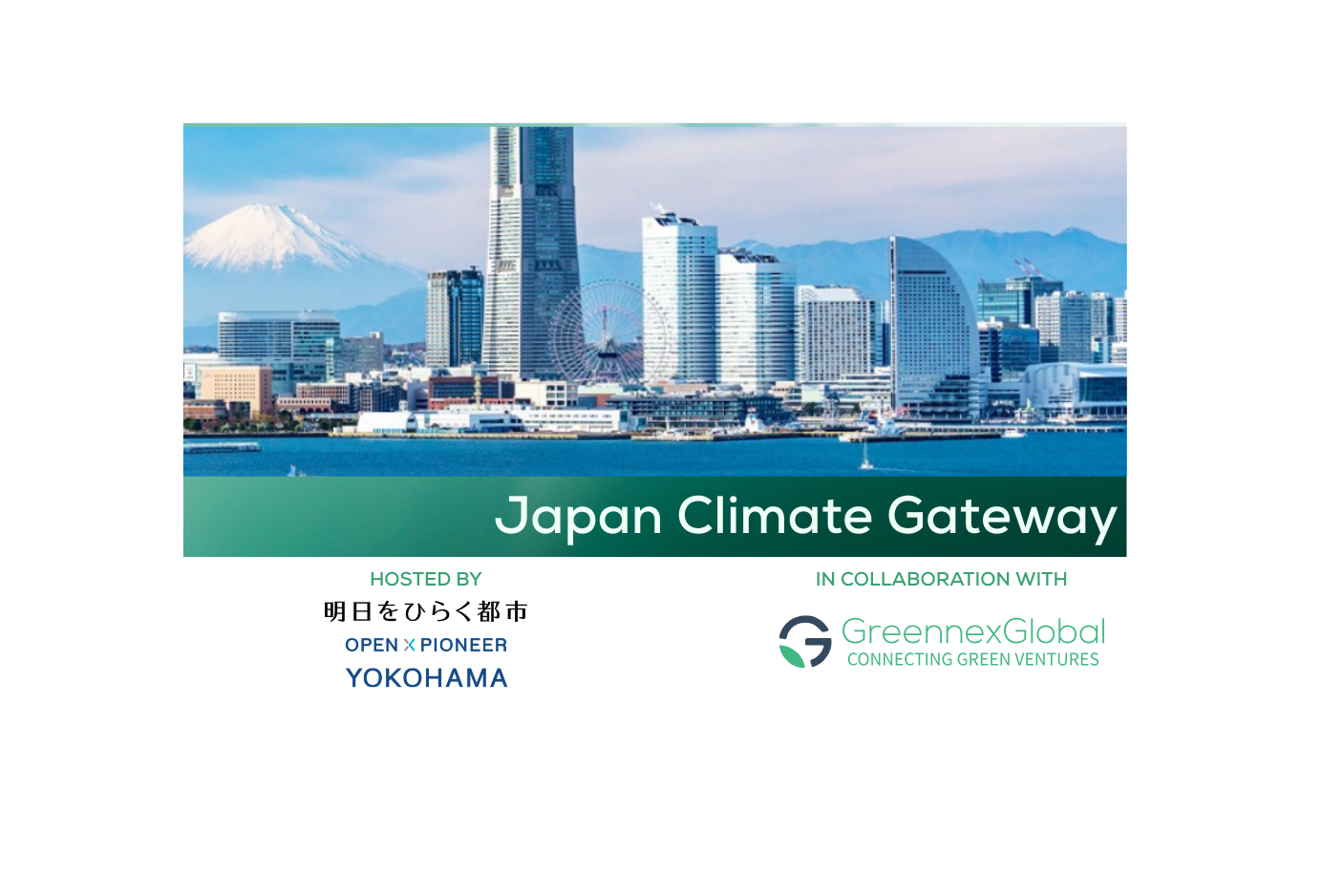
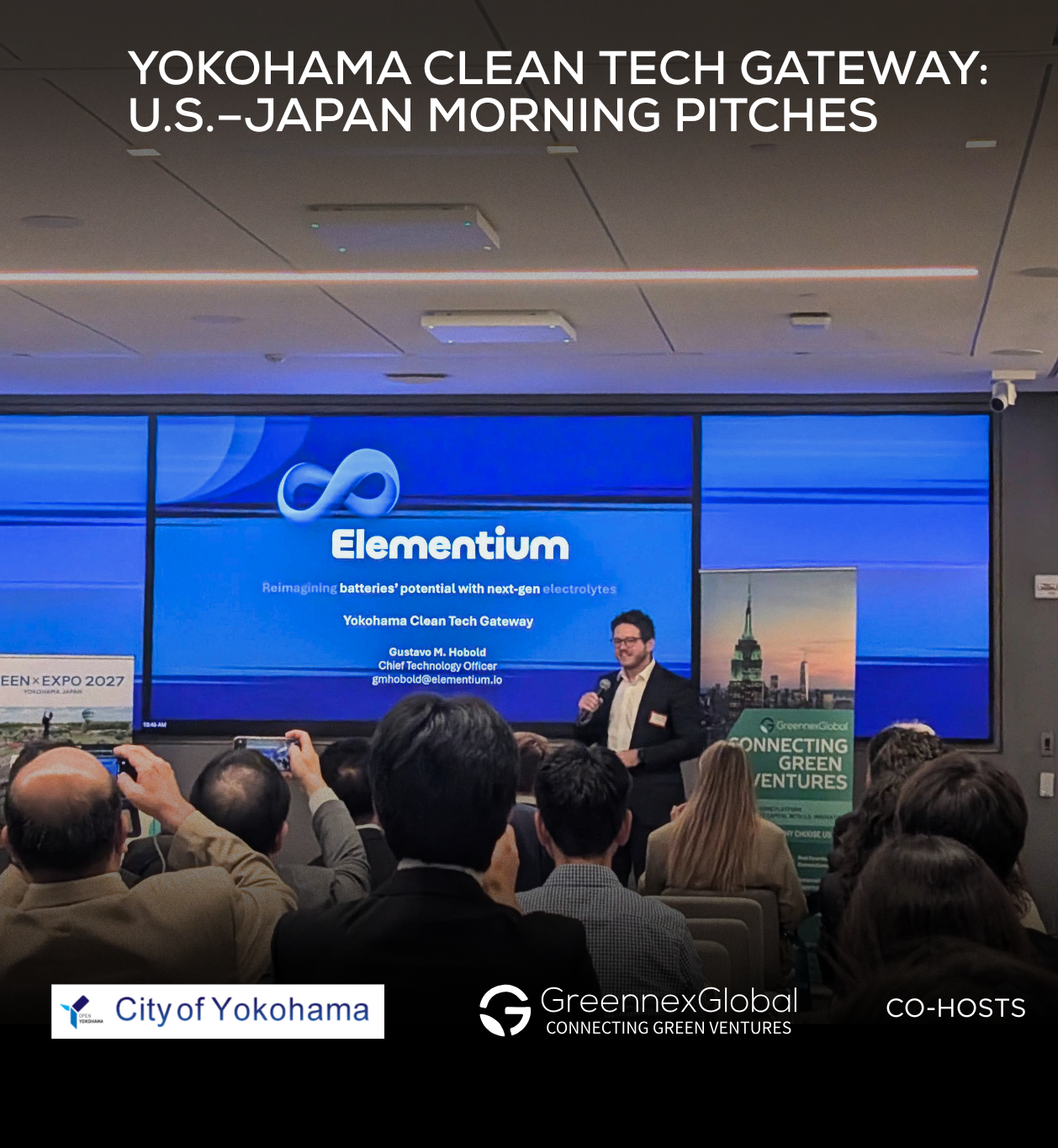
On June 1st, the first day of New York Tech Week, Greennex Global co-hosted the Yokohama Climate Tech Gateway at Baker & McKenzie LLP in New York alongside the City of Yokohama and ShibuLA Ventures. This was our third collaboration with the City of Yokohama, and the most ambitious yet, a full afternoon program bringing together 150 participants, 30+ investors and VCs, and 15+ Japanese corporates to work through a question that sits at the center of everything Greennex is building: how do the most commercially ready U.S. climate and deep tech companies actually reach the international markets that need them?
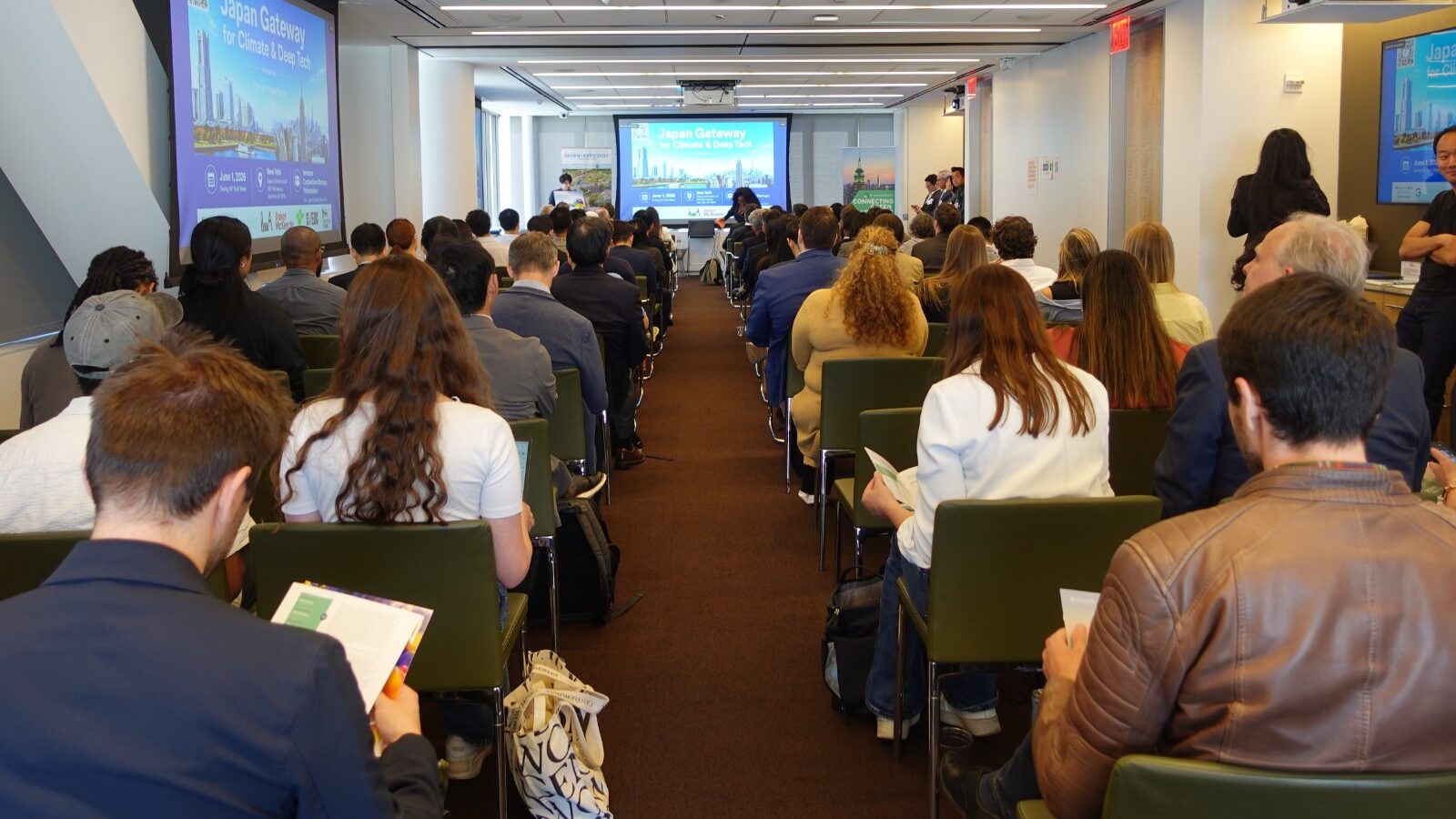
Kazuma Yamamoto, Director of the Economic Division at the Consulate General of Japan in New York, opened the session by pointing to something he called highly symbolic. Andreessen Horowitz, one of the world’s most influential venture firms, recently announced it will open its first overseas office in Japan. “Japan is increasingly recognized not only as a market for technology, but as a place where startups can grow, scale, and collaborate with world-class Japanese industries,” he said. The Japanese government has made startup promotion a national priority, and that shift is creating real entry points for U.S. founders who are ready to move.
Building the Infrastructure for What Comes Next
Nicole Spina, Vice President of Climate Innovation and Industry Development at the NYC Economic Development Corporation, delivered the keynote with a clear message: New York City is not just a launchpad, it is actively building the physical and programmatic infrastructure to support climate companies through commercialization. The centerpiece was BatWorks, the city’s emerging climate innovation hub in Brooklyn, backed by $110 million in city investment and set to come fully online in 2028 with labs, prototyping space, workforce training, and piloting opportunities on city-owned assets. “An opportunity to demonstrate your solution in a live urban environment, space owned and managed by the city, is really valuable in commercializing and seeding a market,” Spina said. Japan ranks as New York City’s second-highest green economy investor, and Spina was direct about the opportunity to deepen that relationship through programs like this one.
Where the Capital Is Moving
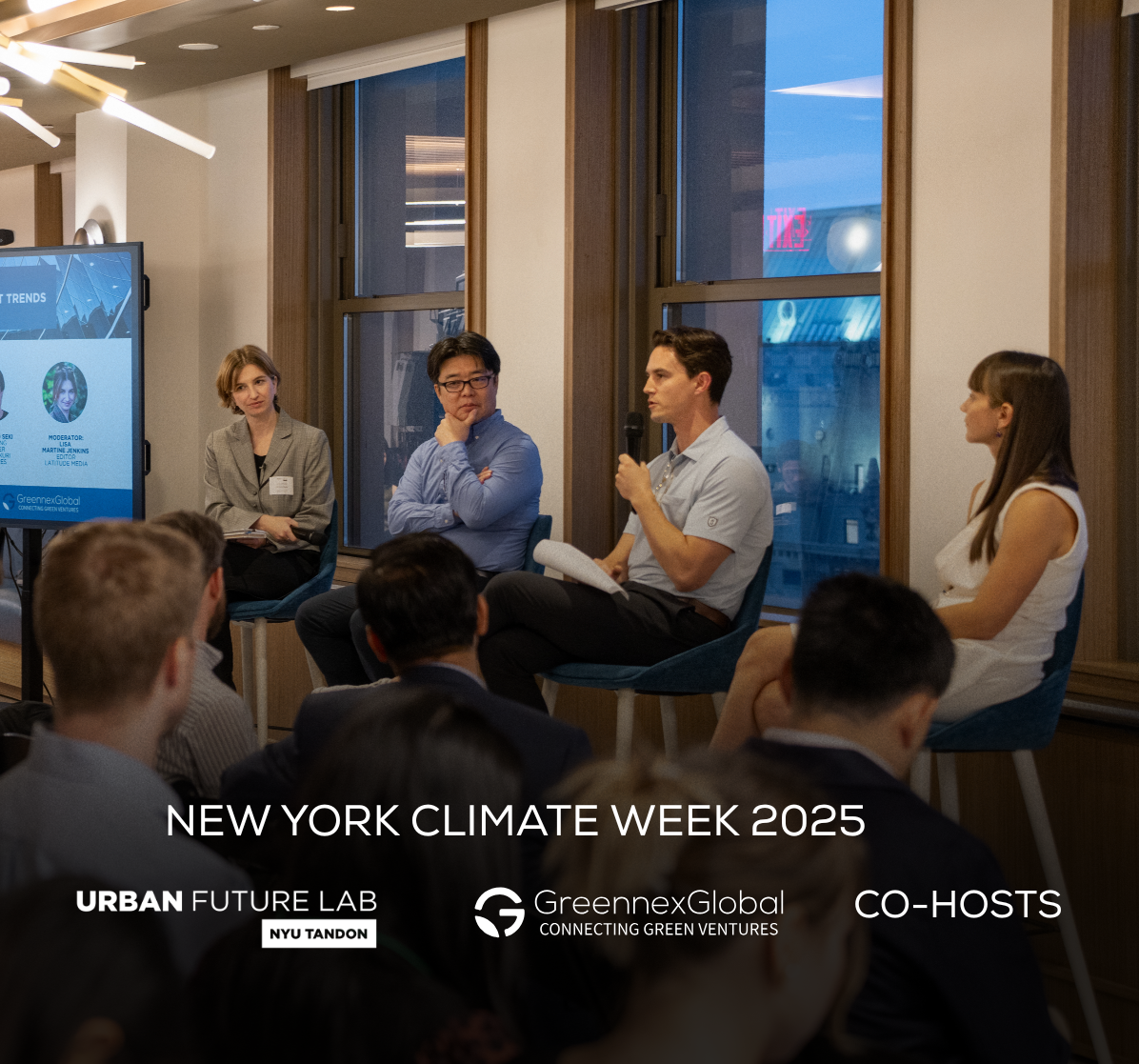
Moderated by Kevin M. N. of ShibuLA Ventures, the first fireside chat brought together Masami Shibamoto of JERA Americas, Richard Bourgeois of NYSERDA, and Raluca Florea of Decarbonization Partners to work through what has actually changed in climate and deep tech investing and what it takes to get a technology past the pilot stage. The panel converged on a theme that ran through the rest of the afternoon; that capital is no longer chasing early-stage bets, it is chasing commercialization. AI-driven energy demand has accelerated that shift dramatically, pulling investment toward power infrastructure, grid buildout, and technologies that can prove their economics at scale. Florea put the investor lens plainly, “Often times, your pilot scale is not going to have the economics of the full commercial scale. The first question we ask when we underwrite is what would it take to get there and who is going to provide that capital.”
Manufacturing Is Climate Tech
The second fireside chat, moderated by Sabrina Sasaki of Monozukuri Ventures, brought a different and equally important frame to the afternoon. Cvic Innocent of Frankenbuild Ventures and Stacey Weismiller, President and CEO of the American Manufacturing Futures Institute, made the case that the separation between manufacturing and climate tech has always been a false one, and the field is finally catching up to that reality. Weismiller enforced that, “There shouldn’t even be a word called climate tech. It should just be tech, because everyone should be in climate.” Innocent took that further in his direct address to the Japanese corporates in the room, encouraging them not to shy away from backing first-of-a-kind technologies, “When you back them, that will become an industry standard, because you are the Goliath behind it.”
Six Startups. Ninety Million Early-Stage Funding.
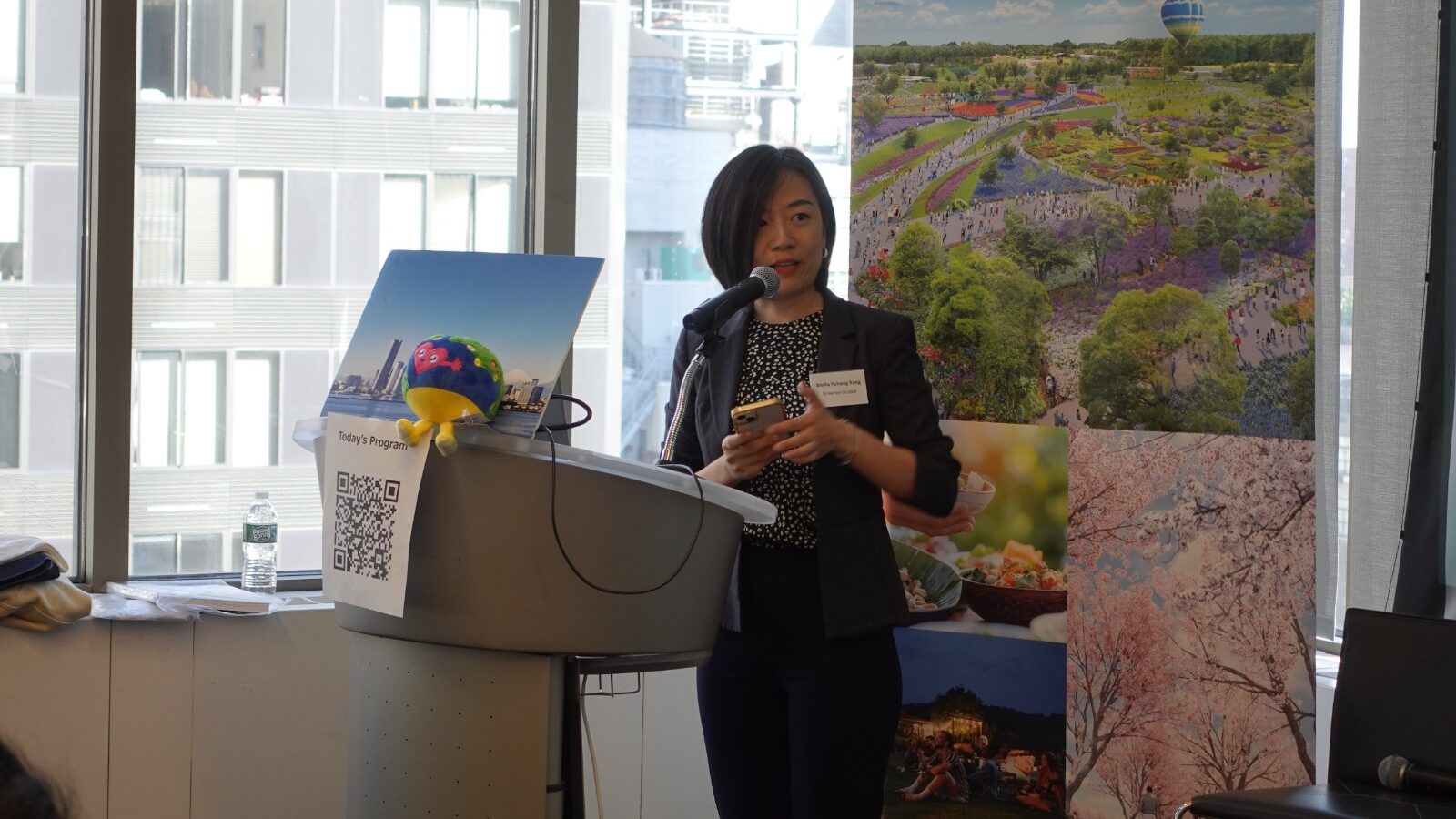
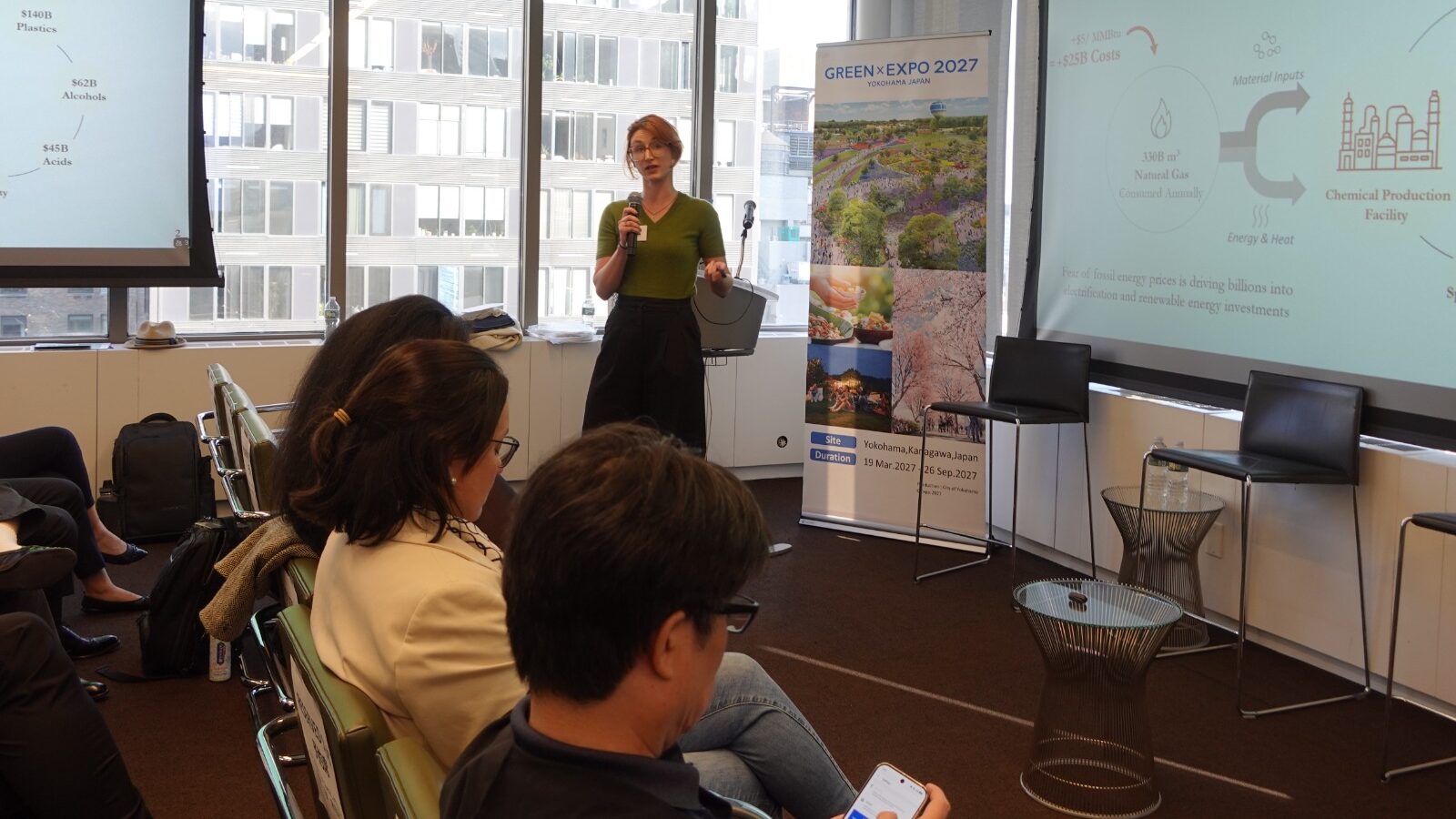
Stella Song, Founder of Greennex Global, introduced the pitch session as the heart of what the Climate Gateway is built to do. “These are national lab alumni, scientists-turned-entrepreneurs, and PSG founders bringing the most serious climate tech innovation in the U.S. to a global stage,” she said. The six companies pitching collectively represent more than $90 million in early-stage funding, each selected for their commercial traction and fit for the Japanese market specifically.
Realta Fusion
Fusion energy · Superconducting magnets · Zero-carbon power · Linear reactor
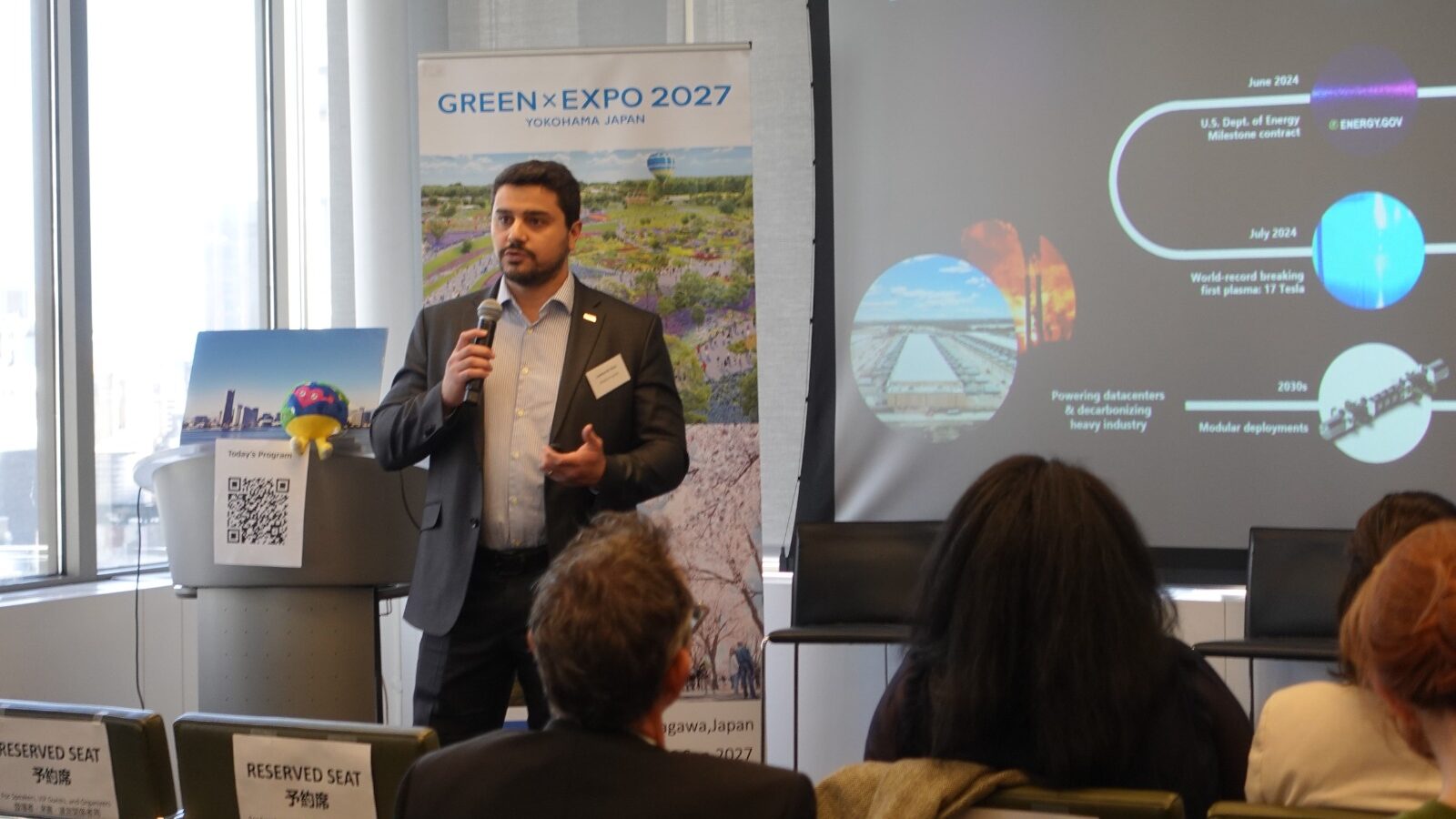
Presented by Leonardo Reis, Head of New Business Development, Realta Fusion spun out of a landmark physics experiment at the University of Wisconsin-Madison in 2022 and is developing what it describes as the lowest capital, least complex path to commercially competitive fusion energy. The company applies advances in superconducting materials, plasma physics, and computing power to a simple linear reactor configuration, a design that significantly reduces the capital cost of a fusion power plant while using abundant fuel sources to deliver zero-carbon heat and power. In his pitch, Reis emphasized the modular, replicable nature of the COSMO platform and the company’s existing relationship with the Department of Energy through its Milestone contract, positioning Japan as a strategic partner for both component sourcing and eventual deployment given its depth in precision manufacturing and energy infrastructure.
Evrnu
Textile recycling · Circular fiber · Sustainable fashion · Cellulose innovation
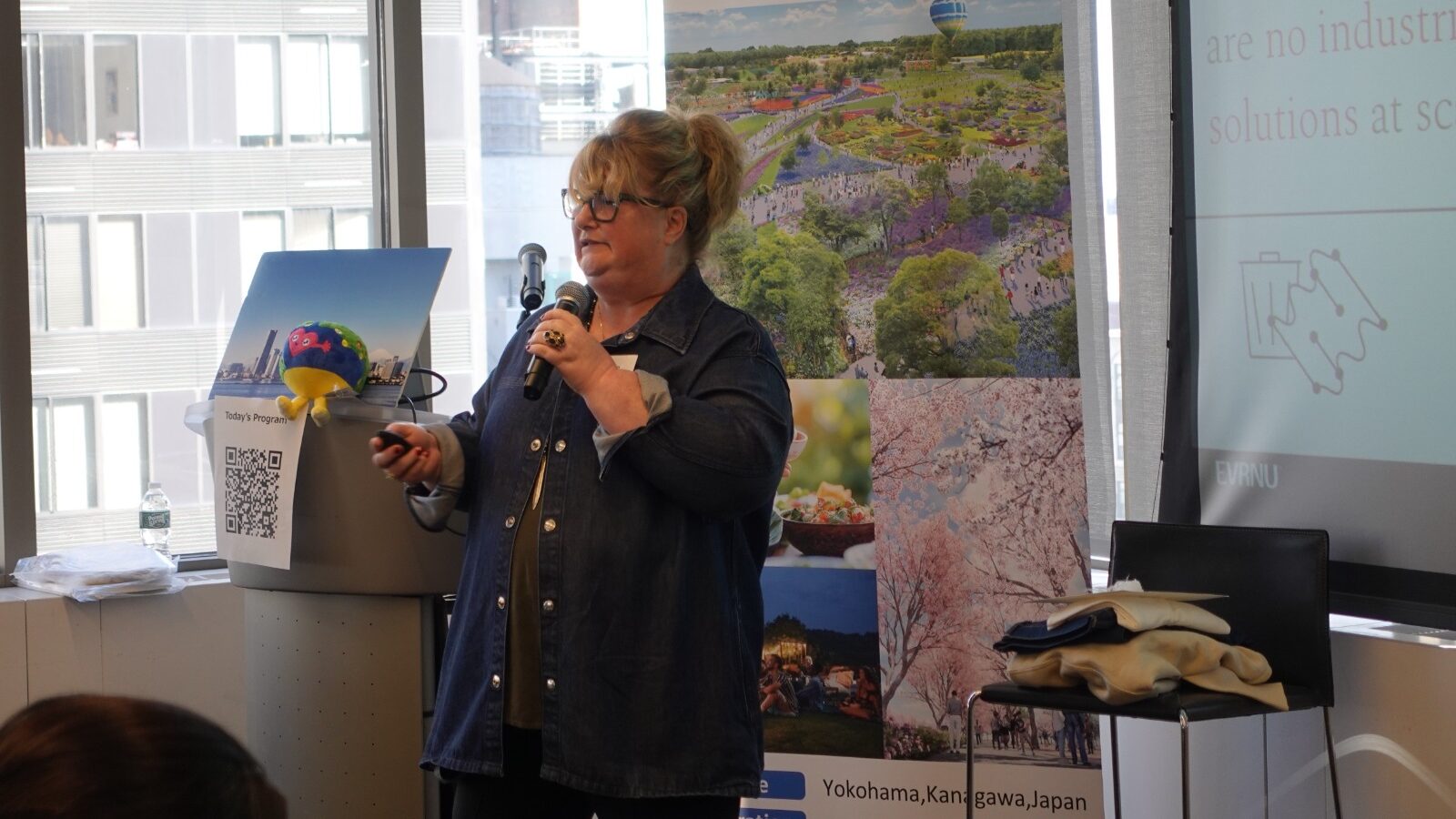
Stacy Flynn, CEO and Co-Founder of Evrnu, presented the company’s flagship NuCycl, fiber made from 100% recycled textiles and engineered to outperform the virgin materials it replaces, with strength greater than cotton and fineness comparable to silk, all from garment waste that would otherwise end up in landfill. With early adopters spanning Levi’s, Adidas, Stella McCartney, and Target, and over half a billion dollars in offtake commitments secured in under 90 days, Evrnu is now moving toward its first commercial facility in Spartanburg, South Carolina. Flynn was direct about the international opportunity: with an estimated 750 facilities needed globally just to process available feedstock, Japanese strategics have a real window to influence both offtake commitments and where those facilities get built.
MiMiC Systems
Solid-state thermal management · Refrigerant-free · Heat pump · Building decarbonization
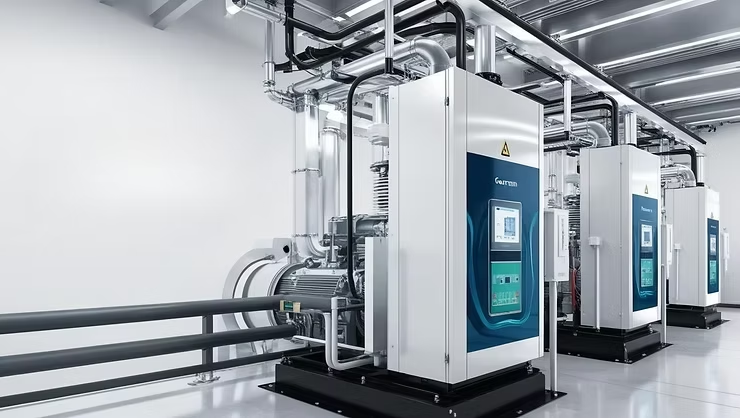
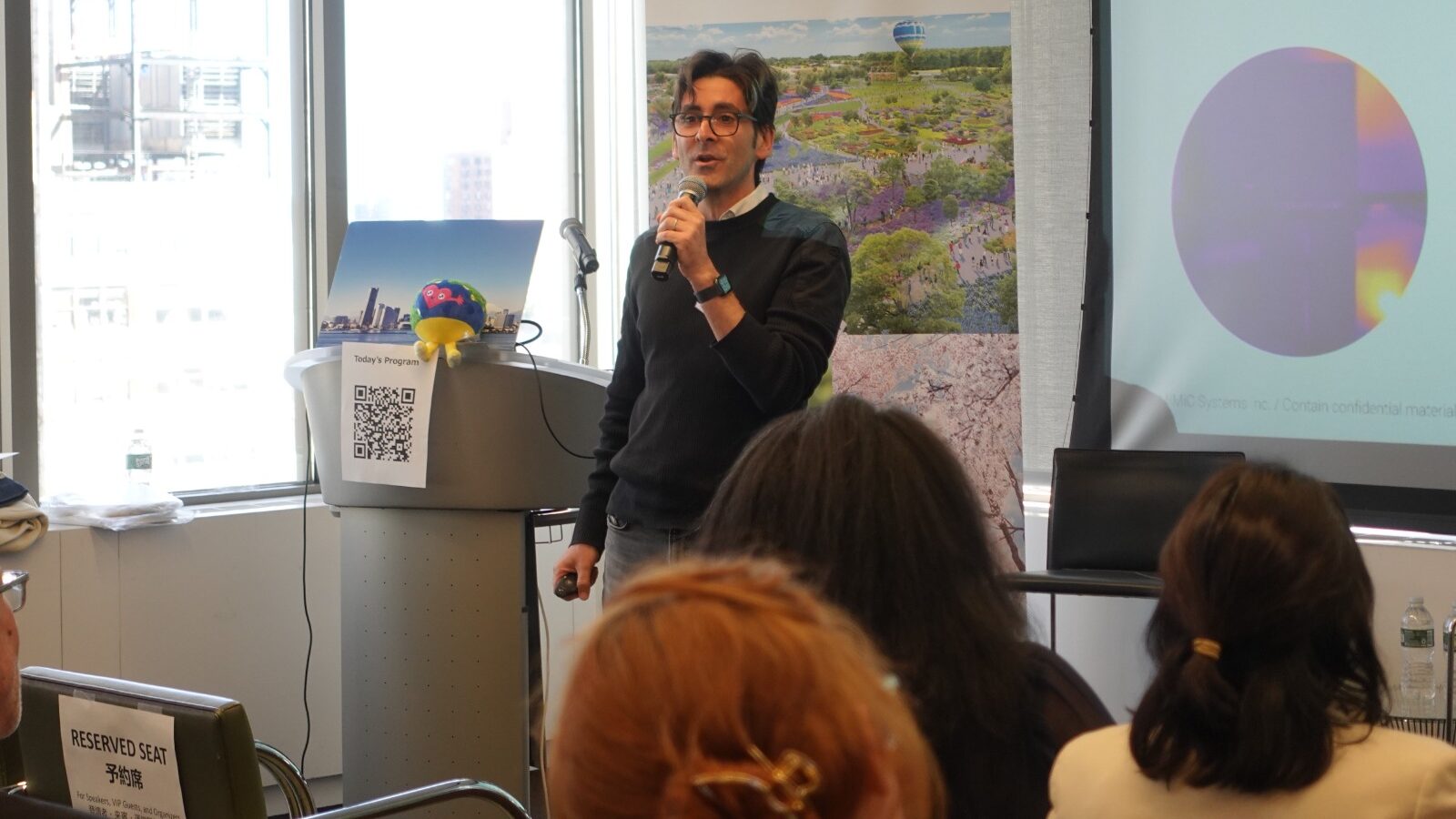
Berardo Matalucci, Founder of MiMiC Systems, presented the company’s core argument, that refrigerant leaks and compressor failures in conventional heating and cooling systems are among the most disproportionate contributors to GHG emissions, and that transitioning to a refrigerant-free society is one of the highest-impact single actions the built environment can take. MiMiC is developing a solid-state heat pump that moves heat using semiconductors rather than chemicals or mechanical components, no refrigerants, no moving parts, no leakage with materials that are 30% more efficient than existing options and a modular architecture that scales from building retrofits into data centers and industrial applications. For Japanese corporates with deep expertise in semiconductor manufacturing and materials, the technology presents a natural co-development and commercialization opportunity.
FAST Metals
Critical minerals · Mine waste recovery · Rare earth elements · Green iron
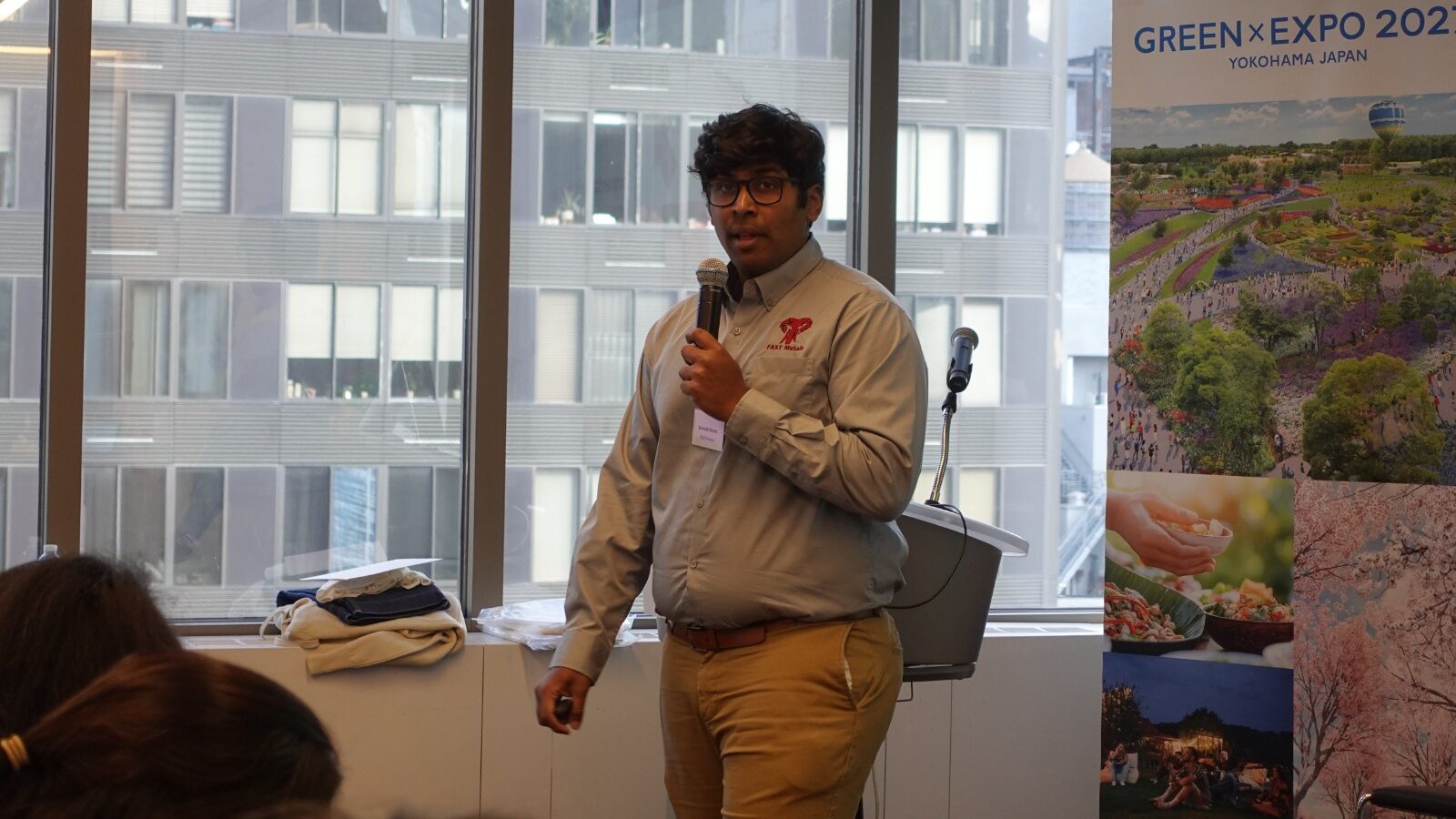
Sumedh Gostu, CEO and Co-Founder of FAST Metals, presented the company’s hydrometallurgical process for extracting iron, aluminum, scandium, titanium, and other rare earth elements from bauxite residue, the toxic industrial waste produced in aluminum manufacturing, with current global reserves sitting at approximately 3 billion tonnes and growing. The process not only generates revenue from metals that were previously stranded in hazardous tailings facilities, but it also addresses one of the mining industry’s most significant environmental liabilities, making aluminum extraction cleaner and more sustainable at scale. With Rio Tinto already on board as an early investor and a paid pilot customer in Florida, FAST Metals is scaling toward a ton-per-day demonstration system and ultimately a commercial joint venture facility, a pathway that aligns directly with Japan’s strategic interest in securing critical mineral supply chains.
Turnover Labs
Industrial CO2 utilization · Chemical feedstocks · Electrolyzer technology · Hard-to-abate industries
Marissa Beatty, Founder and CEO of Turnover Labs, presented the company’s mission to decarbonize the chemical industry by converting waste CO2 streams, the kind that are too impure and dilute for conventional carbon capture processes, directly into valuable commodity chemicals including methanol, carbon monoxide, and organic acids, using proprietary electrolyzer technology built to withstand the harsh conditions found in industrial environments. Rather than treating CO2 as a disposal problem, Turnover Labs creates an on-site revenue stream from what chemical manufacturers currently emit, reducing both their fossil fuel input costs and their emissions exposure. With technology roots tracing back to research at Kyoto University and four pilot projects launching across Singapore, India, Japan, and Thailand in the coming year, the company already has meaningful ties to the region and a clear deployment pathway into markets where CO2 storage infrastructure is limited and the economics of on-site utilization are particularly strong.
Florrent
Supercapacitors · Grid storage · Agricultural waste valorization · AI power quality
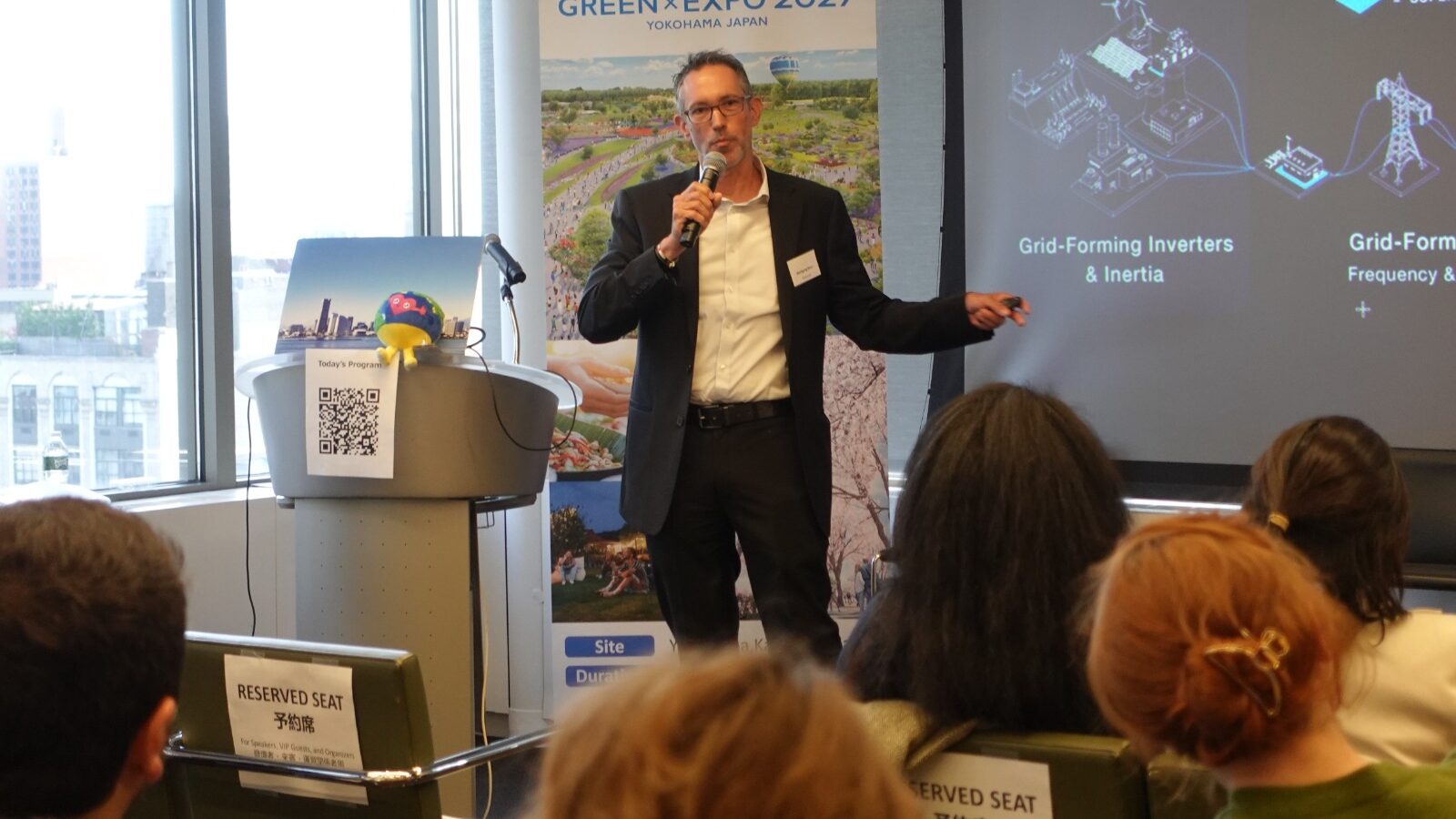
Wolfgang B., Head of Business Development at Florrent, presented the Massachusetts-based company’s next-generation supercapacitors, built on a proprietary high energy density activated carbon derived from agricultural waste streams, a supply chain model that also creates economic opportunity for underrepresented farming communities. Florrent’s supercapacitors deliver power quality and reliability to commercial, industrial, and grid customers at a lower initial and total cost of ownership than incumbent lead-acid and lithium-ion battery technologies and are particularly well suited to flattening the millisecond power spikes that AI computing generates in data centers spikes that, left unmitigated, cascade into battery damage, equipment failure, and significant lost revenue. With a manufacturing partner already operating a facility in Japan and over 2.2 gigawatts of deployed installed capacity, the company is actively seeking strategic partners who can support local production across the U.S., Europe, and Asia.
Closing Remarks
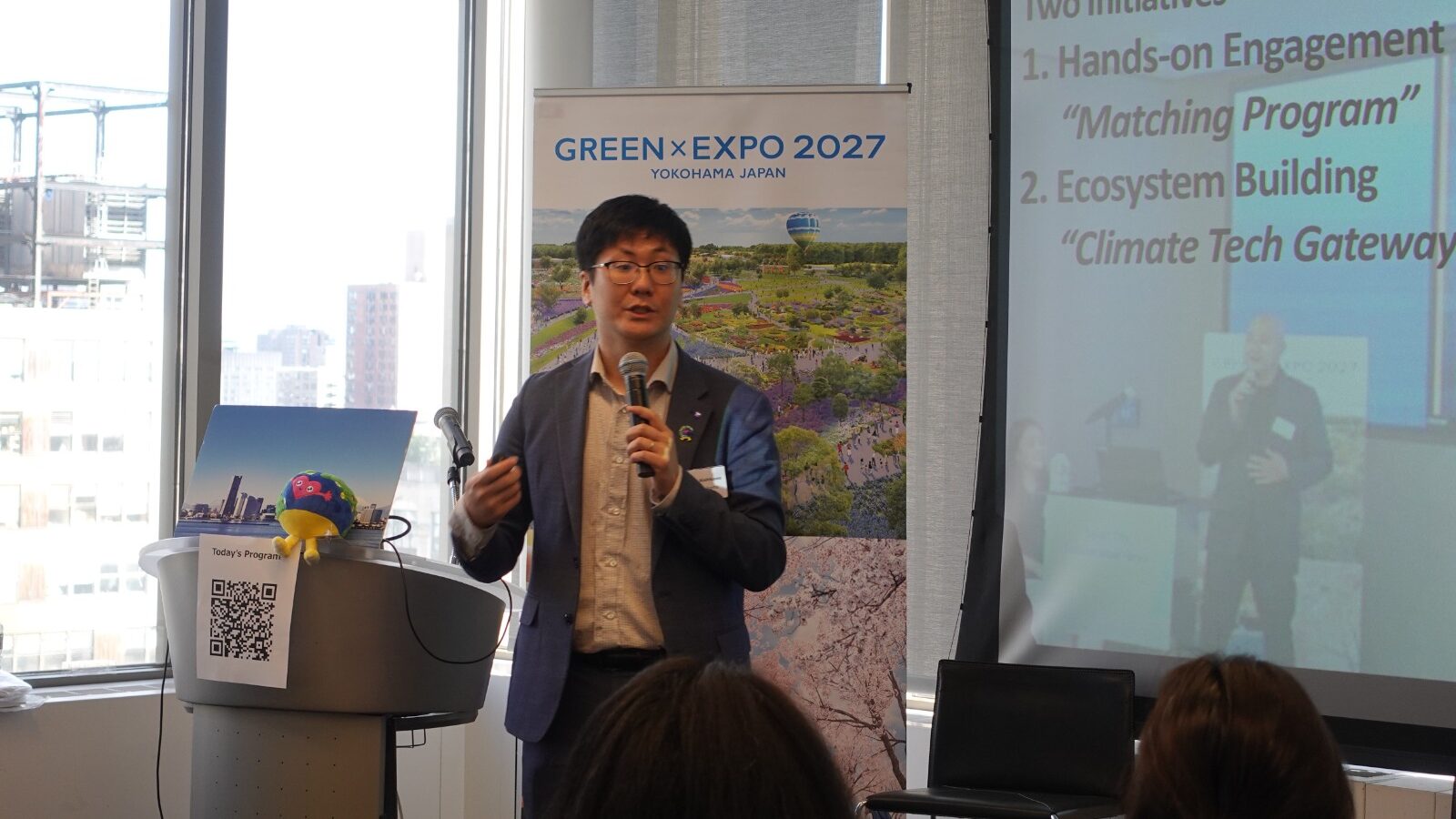
Masahiro Nishikawa of the City of Yokohama closed the formal program by grounding the afternoon in what Yokohama is actually building, a long-term platform for U.S.-Japan innovation exchange, including an ecosystem matching program supporting international startups in building pilots and partnerships in Japan with new cohorts launching in the coming months. “Innovation only takes place when people meet each other and exchange ideas constantly over time,” he said. “This is the first edition, and we are learning.”
That spirit ran through everything the afternoon produced. Across two fireside chats, six startup pitches, and a room of investors, corporates, and founders, the same conclusion kept surfacing that the technology exists, the capital is moving, and the appetite on the corporate side for commercially ready U.S. innovation is real and active. What has been missing is the structured, recurring access that allows those conversations to go somewhere, and that is exactly what the Climate Gateway is designed to provide.
What’s Next
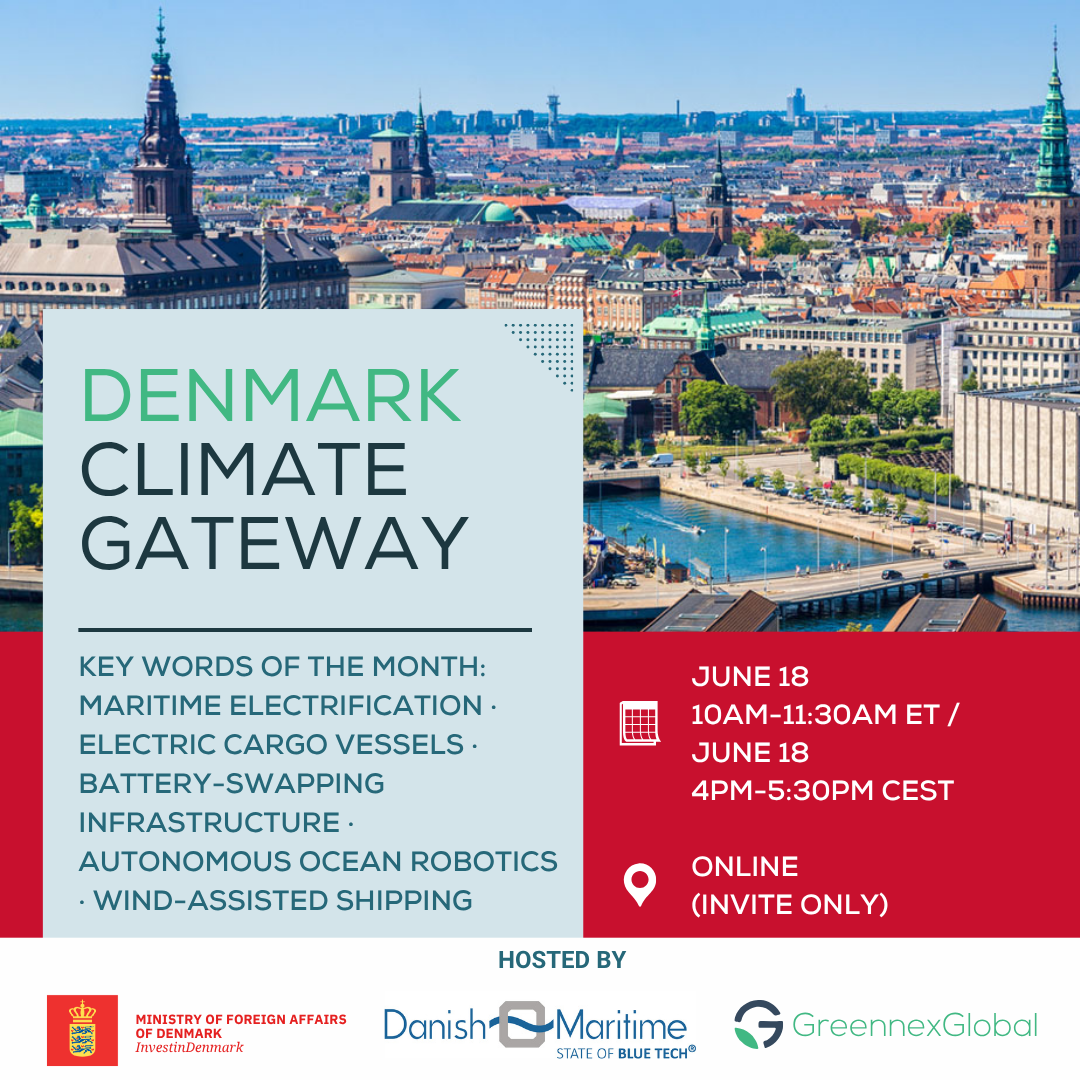
The Greennex Climate Gateway continues throughout 2026. The Denmark Climate Gateway is next in June, connecting U.S. climate and deep tech founders with Scandinavian investors and maritime industry partners, followed by Climate Week NYC in September.
For startups building commercially ready climate and deep tech solutions with an eye on international deployment, this is where those partnerships are formed.
Startups: Apply to pitch at a Greennex Climate Gateway event.
Investors and corporate partners: Contact us at info@greennexglobal.com
Greennex Global is a cross-border venture platform connecting commercially validated U.S. climate and deep tech companies with international corporate operators, institutional investors, and government partners across more than 15 countries. Let’s keep building the bridge between global capital and climate innovation.