By Sara Khalid, Greennex Global Editor | June 2026
On June 18th, Greennex Global co-hosted the US-Denmark Maritime Climate Gateway alongside Invest in Denmark and Danish Maritime, bringing together Danish corporate partners, investors, and ecosystem leaders with six US maritime climate innovators for a session focused on one of the most underleveraged opportunities in the global energy transition: the commercial pathways connecting US deep tech with Denmark’s unmatched position at the center of global maritime industry.
The US-Denmark Maritime Climate Gateway is a dedicated program connecting Danish partners with top US maritime climate innovations and structured pathways for commercial engagement and deployment as part of the broader Greennex Climate Gateway program running across Japan, Singapore, London, Denmark, and beyond.
Opening Remarks: Why Denmark, and Why Now
Bjarke W. Botcher, Director of International Affairs at Danish Maritime, opened by the session explaining of what Denmark has built and where it is headed. Though most large-scale shipbuilding moved to Asia over the past few decades, Denmark responded by moving up the value chain into more advanced, knowledge-intensive segments of the industry and as a result, the Danish maritime sector today employs more people than it did when its shipyards were at their peak. It ranks as the world’s seventh-largest maritime industry despite the country’s modest size of just over 6 million people. Danish companies are now global market leaders in such fields as ship design, engine design, marine coatings, pumping technologies, electric propulsion systems, and life-saving equipment, a breadth of capability that makes Denmark a natural destination for US innovators looking for partners who can take a technology from pilot to global deployment.

Botcher was also direct about the current moment for US-Denmark collaboration: the United States is engaged in an important discussion about revitalizing its shipbuilding industry, and should there be an opportunity for closer transatlantic cooperation on more efficient and competitive shipbuilding, Danish Maritime would welcome it. “The more maritime companies that choose to establish themselves here, the easier it becomes for all of us to find partners, customers, employees, and investors,” he said.
Anne Moller Ege, Deputy Director of Invest in Denmark, followed with a picture of what Denmark offers U.S. companies considering entry into the Nordic market. Invest in Denmark provides free, confidential, and tailored advisory covering regulation, partner identification, and navigating the business landscape, functioning, as Ege put it, as a gateway to the Danish ecosystem throughout the entire process of establishing a presence. She pointed to several data points that underscore Denmark’s maritime significance: the sector accounts for approximately 10% of Denmark’s GDP, shipping remains one of its largest export industries, and 51% of new ships on order in Denmark can operate on alternative fuels, compared to roughly 17% globally. “Blue Denmark offers a thriving, innovative ecosystem where maritime technology companies can develop, test, collaborate, and scale globally,” she said, and Invest in Denmark’s role is to make sure international companies can access that ecosystem efficiently.

Fireside Chat: The Denmark Maritime Climate Investment Landscape
James Paisley, Venture Builder at Studio 3050, joined Stella Song for a fireside chat that covered the commercial realities of maritime decarbonization with the kind of ground-level specificity that comes from years working across Copenhagen, Singapore, Athens, Hamburg, and London at the startup-corporate interface.
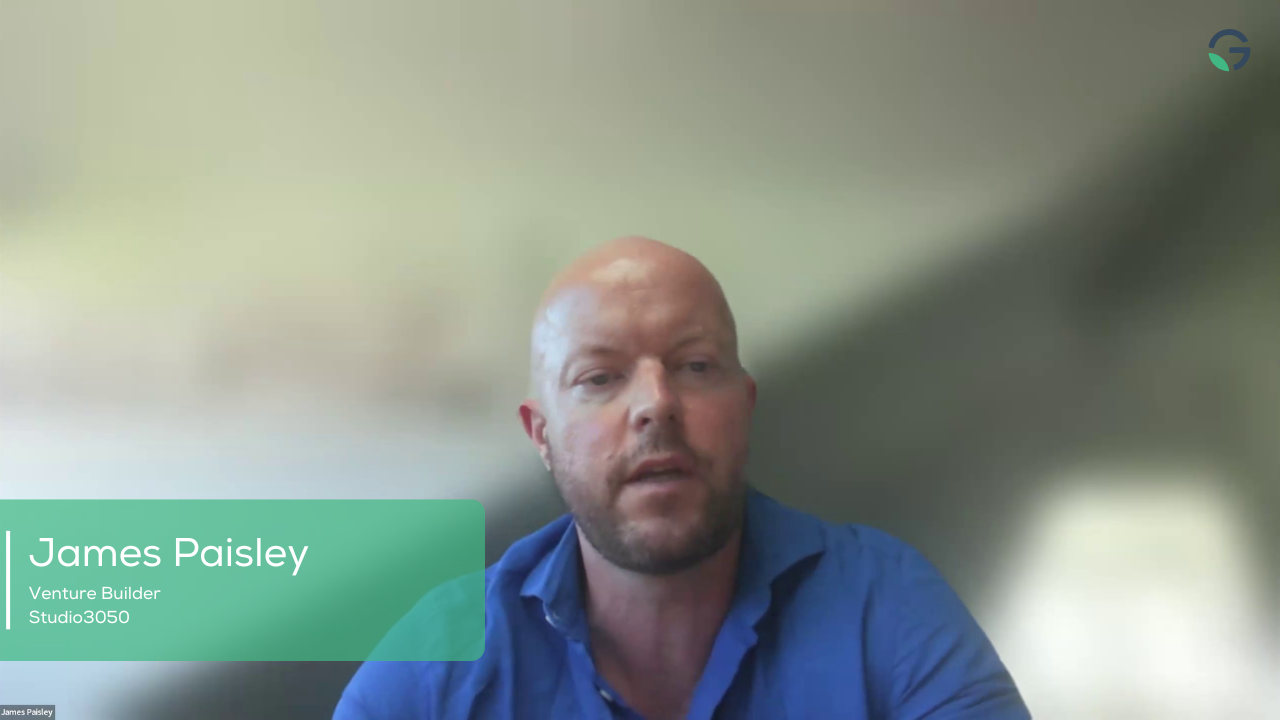
On what makes Denmark uniquely valuable, he identified three things that rarely coexist in any single location: all the key stakeholders in one place, a deep talent pool of former mariners and industry graduates who move fluidly across the sector, and a flat culture where a Friday evening conversation with a CEO can become a pilot project by Monday. “In most places, you get two out of three,” he said. “Here you’ve got all three; the stakeholders, the talent, and the right culture, all in one postcode.”
On technologies, he pointed to electrification of shorter-route vessels as the clearest near-term opportunity, autonomous vehicles for niche applications in North Sea and Baltic Sea infrastructure security as genuinely compelling, and drew a useful distinction between the IMO Net Zero framework, not yet driving procurement decisions, and EU ETS, which dropped and immediately triggered a race to solve compliance problems, creating real winners among companies that had positioned themselves correctly.
On working with Danish buyers, Paisley’s framing to find the one in ten companies for which the timing is right, stay focused on solving their specific problem before expanding anywhere else, and make sure the numbers add up. Pilots are getting shorter, with the market moving toward demonstrating value in six to eight weeks rather than six months. “The story has to add up, not just the narrative and the pitch deck, but the financial models too. If they invest a dollar in your solution, it’s got to save them two. That’s just how it’s got to be.”
Pitching Startups
Stella Song introduced the startup pitch session as the direct expression of what the Climate Gateway program is built to deliver: US founders with demonstrated commercial traction, in front of the Danish partners, investors, and corporate operators positioned to help them scale internationally. “These are not early-stage concepts,” she said in her closing. “These are teams with signed contracts, institutional backing, and real commercial momentum, exactly the kind of innovation that Greennex Global is built to connect.”
Voltic Shipping
Electric cargo vessels · Solar-battery-autonomy · Zero-emission propulsion
Presented by Prosser Cathey, Founder of Voltic Shipping, the company is commercializing next-generation electric cargo vessels built on MIT Ocean Engineering research, combining solar power generation, battery storage, and autonomy to eliminate the two largest cost buckets in shipping, fuel and crew, and deliver operating margins of 50% or higher. By generating power for free via solar rather than shifting costs to the grid or biofuels, Voltic’s vessels achieve four times the profitability of legacy ships, a figure that holds even when amortized capex over a typical 20-plus-year vessel lifespan is factored in.
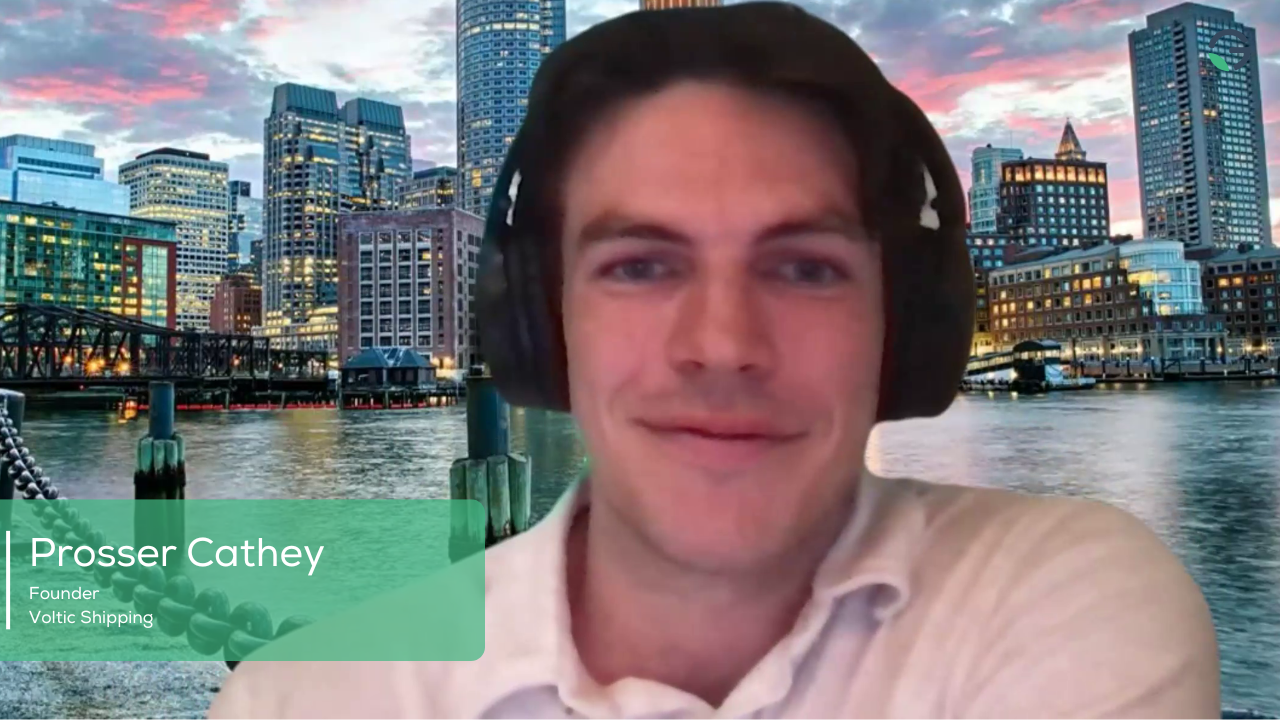
Cathey updated the sales figure during his pitch, noting that the company now has more than $400 million in binding sales and signed contracts with customers, including Kuehne Nagel, the world’s largest shipper by volume, and Fortune 500 companies such as Waste Management. With regulatory approval already in hand from Lloyd’s Register and the U.S. Coast Guard, and backing from Y Combinator, NOAA, and the Department of Energy alongside strategic investors with deep maritime operating experience, Voltic has retired both the commercial and technical risk and is now focused on deploying at an increasingly larger scale.
Photon Marine
Electric outboard motors · Commercial harbor craft · Fleet management software
Marcelino Alvarez, CEO and co-founder of Photon Marine, presented the company’s case for electrifying commercial harbor craft for the ports, utilities, seafood operations, tourism operators, and transportation providers that run repeatable short-route operations every day and for whom traditional gas outboards represent a $400,000 liability over a seven-year lifespan. Photon’s P300 electric outboard motor delivers 300 horsepower peak and 150 horsepower continuous with torque available immediately, paired with fleet management software that helps operators understand which vessels in a fleet are optimized for electrification now and which aren’t ready yet.

With more than $5 million in booked revenue from partners including the Port of Friday Harbor, Port of Detroit, Port of Oakland, the New York Power Authority, and Scripps Institution of Oceanography, the company has built its commercial foundation on the US West Coast, where cap-and-invest incentive programs have significantly reduced upfront costs, and is now looking at Denmark specifically as its European beachhead. “Our playbook in the US of starting with the port and expanding outward, we think that works in Denmark too,” Alvarez said. The company is finalizing a $40 million debt facility, scalable to $200 million to support international expansion and is currently raising a Series A.
Orpheus Ocean
Autonomous underwater vehicles · Deep Ocean access · Subsea infrastructure
Jake Russell, co-founder and CEO of Orpheus Ocean, presented the company’s argument for why the deep ocean is becoming more strategically important than ever for natural resources, subsea infrastructure that carries enormous economic value, and the next front lines of geopolitical conflict and why current access methods, dependent on massive ships costing up to $100,000 per day and tethered ROVs that allow only one point of seafloor contact at a time, are fundamentally inadequate for the scale of access now required. Orpheus Ocean’s AUV, spun out of Woods Hole Oceanographic Institution and developed in collaboration with NASA JPL, can reach full ocean depth at 6,000 meters, land on and operate on the seabed for sample collection and high-resolution survey, and loiter for extended periods without a dedicated research vessel, at under $200,000 per unit, roughly ten times lower cost than any comparable system.

The company operates on a robotics-as-a-service model with 60% mission margins, is currently raising a $6 million seed round, and is actively seeking a Northern European investor given its growing presence in the North Sea and Baltic Sea through the NATO Diana program, where it recently completed its defense capstone at Euro Satori in Paris. In its first full year of operations, Orpheus grew revenue from $250,000 to $1.5 million, a 6X increase that reflects momentum in both the commercial and defense sectors.
Fleetzero
Battery-electric cargo ships · Modular marine batteries · Ocean freight decarbonization
Matt Mallino, VP of Marketing at Fleetzero, presented the company’s thesis that the shipping industry is a multi-trillion-dollar sector running on technology that hasn’t meaningfully changed in 50 to 60 years, and that the path to decarbonizing it runs through hardware, specifically the most energy-dense battery system in the marine space. Fleetzero’s Leviathan energy storage system delivers twice the energy density at half the cost of the closest competitor, and the company’s approach to cooling means its batteries will outlast the lifetime of most vessels they power.
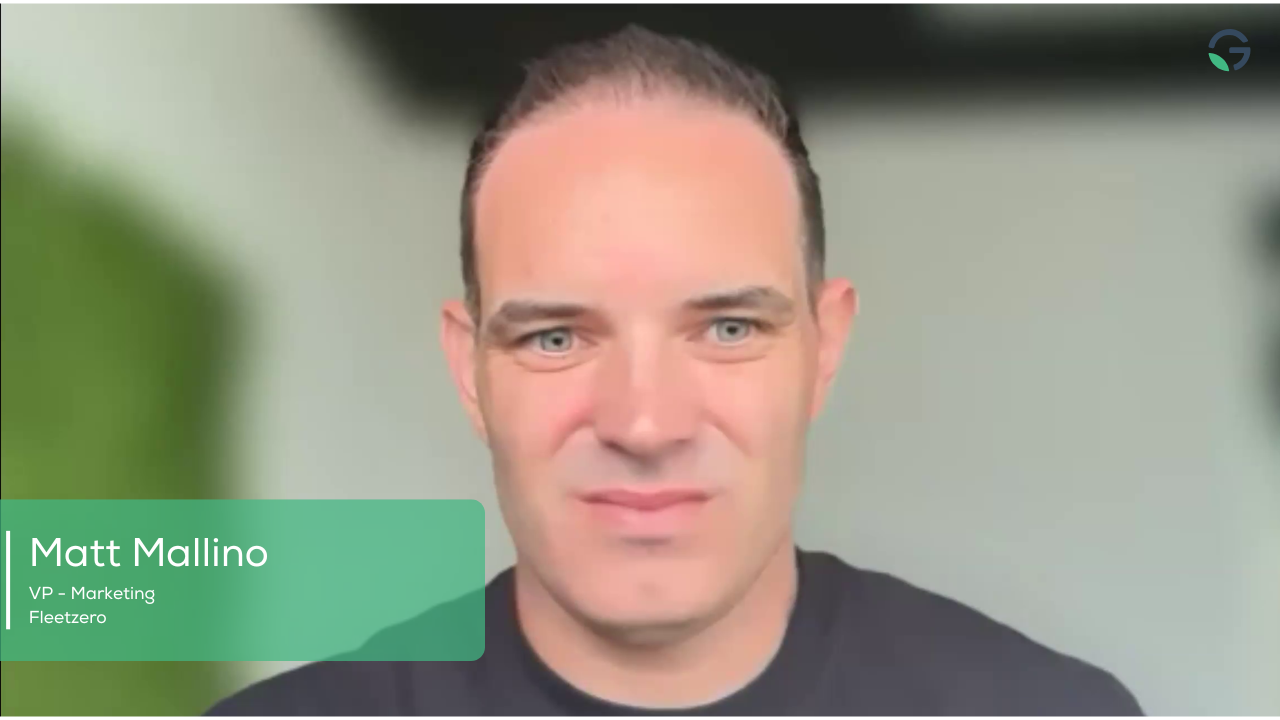
Founded by mariners for mariners, with a team that includes alumni of the US Navy and graduates of Rice and Harvard Business School, the company closed a $43 million Series A at the turn of 2026 with investors including Maersk Growth, Breakthrough Energy Ventures, Y Combinator, Obvious Ventures, and Benson Capital, a set of backers that spans both the investment community and the operators who will ultimately deploy the technology. Fleetzero targets nearshore back-and-forth routes as its entry point, focuses exclusively on projects with a payback period under seven years, and is currently retrofitting what will be the longest-range hybrid-electric support vessel in history, set to debut later in 2026. Denmark’s position as home to Maersk and one of the world’s largest maritime ecosystems makes it a direct strategic market.
CoFlow Jet Lift
Rigid wind sails · Aerospace-derived lift technology · Cargo ship retrofits
Dr. Gecheng Zha, Founder and CEO of CoFlow Jet Lift and a professor at the University of Miami, presented a wind-assisted propulsion technology that takes a fundamentally different approach from every other system on the market. CoFlow Jet Lift embeds fans across the span of a stationary cylinder and uses small mass flow injection at precisely calculated positions to generate very high lift without rotation, dramatically simplifying the system and reducing maintenance costs. The resulting lift coefficient of up to 15 is at least 150% higher than competing technologies, including Flettner rotors and suction wings, and the fuel savings potential is targeting 50% for large cargo ships and up to 90% for smaller and mid-sized vessels, with a projected ROI of four years.

The technology traces its origins to aerospace research funded by DARPA, NASA, and NSF, with $4 million in grants already received, and 24 issued patents providing IP protection that no competing wind-assisted propulsion technology currently holds. CoFlow Jet Lift is raising a $3 million seed round with a term sheet already in hand from a lead investor and is actively seeking a co-investor to close the round and fund the design optimization, testing, and ocean deployment that will bring the product to market within two years.
Sperra
3D concrete-printed anchors · Offshore wind infrastructure · Marine anchoring
Katherine Dykes, CEO of Sperra, presented the company’s Anchors on Demand platform, which uses 3D concrete printing to produce digitally optimized, site-specific gravity anchors for floating solar and offshore wind at a cost and reliability level that the current market cannot match. Anchoring can represent up to 15% of capex for floating solar projects, and station-keeping failures have led to catastrophic project losses totaling more than $300 million across the industry, making it one of the clearest unsolved cost and reliability problems in a sector growing at 20%-plus CAGR.
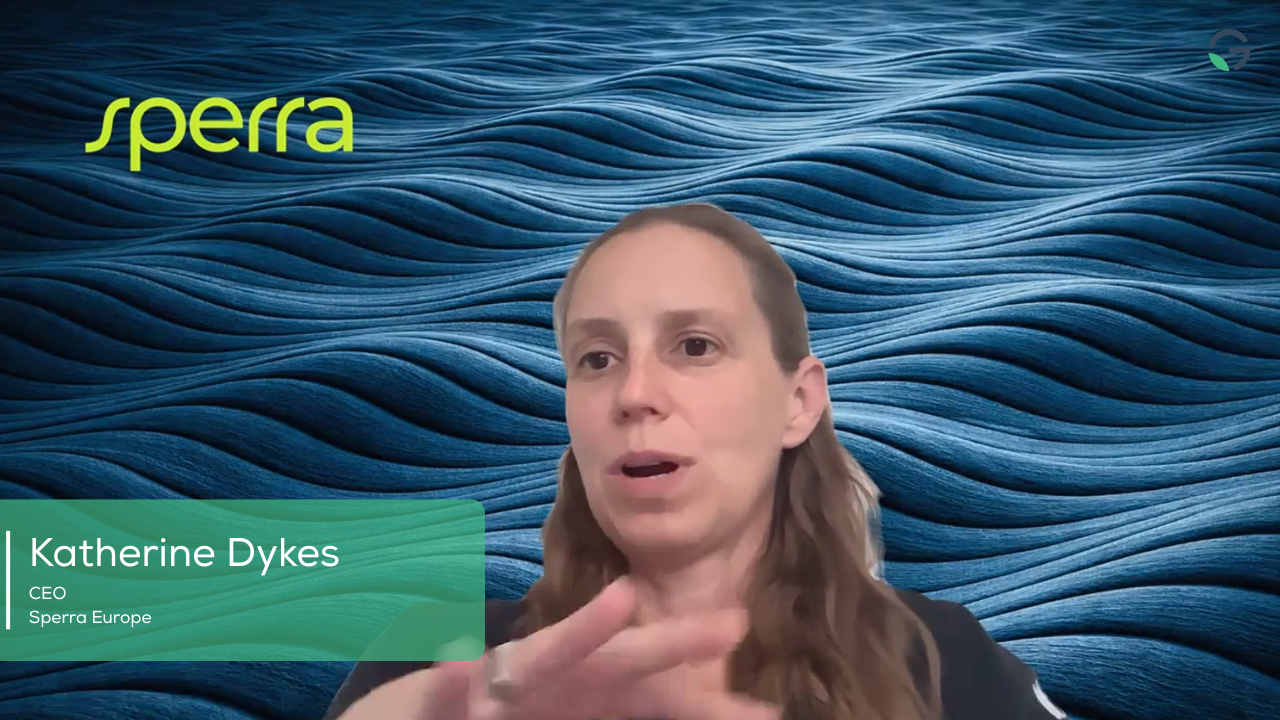
Sperra’s approach reduces the total cost of ownership, leverages local concrete resources rather than complex supply chains, and can be deployed from a design-to-production workflow that is faster and more flexible than conventional anchor manufacturing. The company has already deployed full-scale anchors at EDP’s floating solar site in Portugal in collaboration with Fred Olsen 1848, holds a $25 million pipeline across the US and Europe, and is raising a $1 million seed round to execute its first commercial project. Dykes noted that the company sees significant long-term opportunity in maritime applications beyond floating solar, including floating wind and broader marine infrastructure on demand, and that Denmark’s position as a leader in both offshore wind and maritime innovation makes it a natural home for Sperra Europe’s expansion.
Closing
The six companies that pitched came with signed contracts, institutional backing, and active commercial momentum across electric cargo vessels, autonomous ocean robotics, battery-electric shipping, wind-assisted propulsion, commercial harbor electrification, and offshore anchoring infrastructure. What the Climate Gateway is built to do is make sure that momentum has somewhere to go, structured follow-up, direct introductions, and the kind of ongoing access between US founders and international partners that turns a single session into a real deployment pathway. Greennex Global will be facilitating one-on-one introductions for anyone who wants to go deeper, whether that’s a specific startup conversation or broader engagement with the US climate tech ecosystem.
A sincere thank you to Bjarke and Danish Maritime, and to Anne and Invest in Denmark, for mobilizing your networks and making this a high-impact session and to James Paisley, whose perspective was quoted throughout the afternoon and made everything that followed more meaningful.
What’s Next
The Greennex Climate Gateway continues throughout 2026. Climate Week NYC follows in September, bringing the full Greennex community together across the investor, operator, and founder ecosystem for the next chapter of this work.
For startups building commercially ready climate and deep tech solutions with an eye on international deployment, this is where those partnerships are formed.
Startups: Apply to pitch at a Greennex Climate Gateway event. Investors and corporate partners: Contact us at info@greennexglobal.com
Greennex Global is a cross-border venture platform connecting commercially validated U.S. climate and deep tech companies with international corporate operators, institutional investors, and government partners across more than 15 countries. Let’s keep building the bridge between global capital and climate innovation.