By Sara Khalid, Greennex Global Editor | September 2026
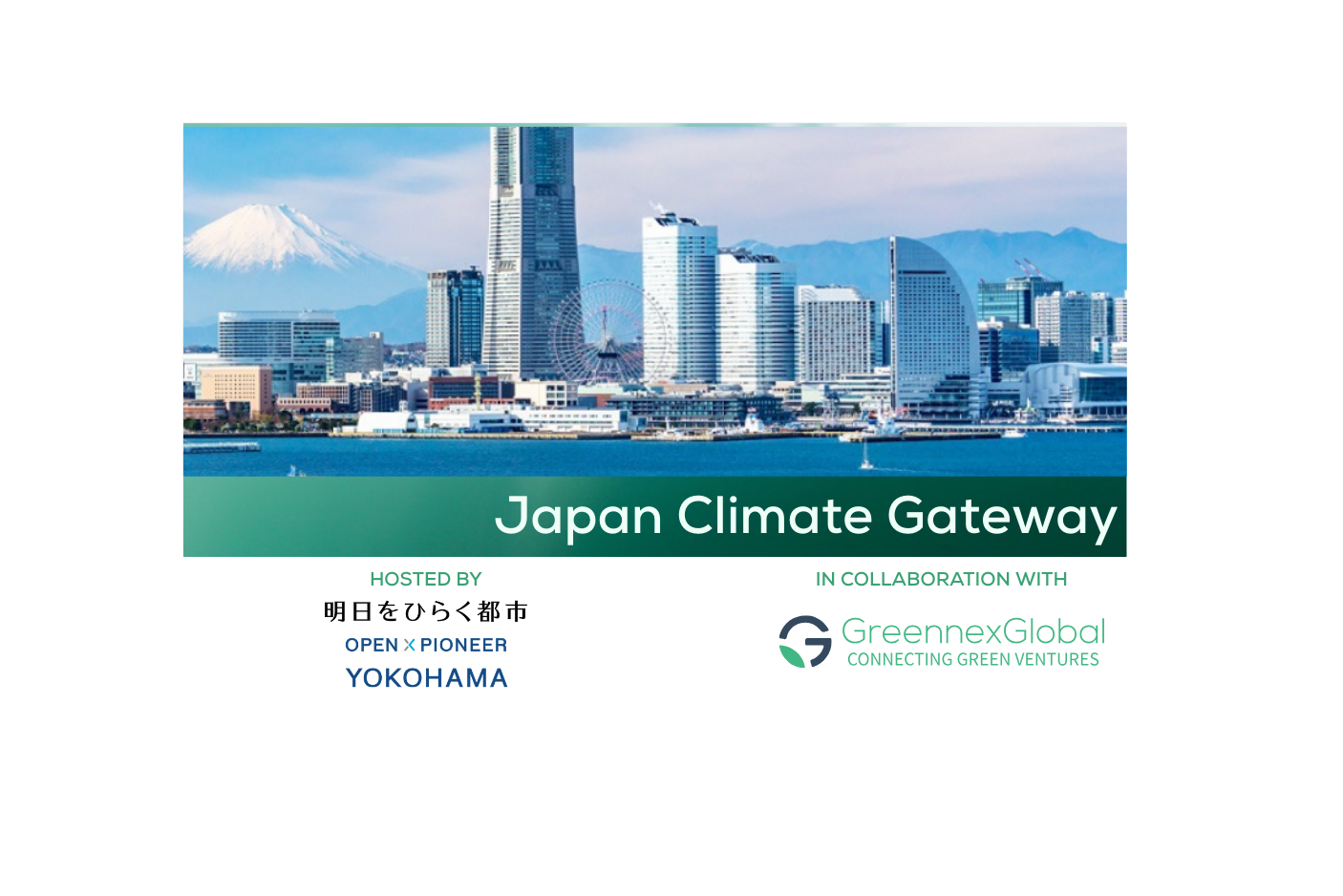
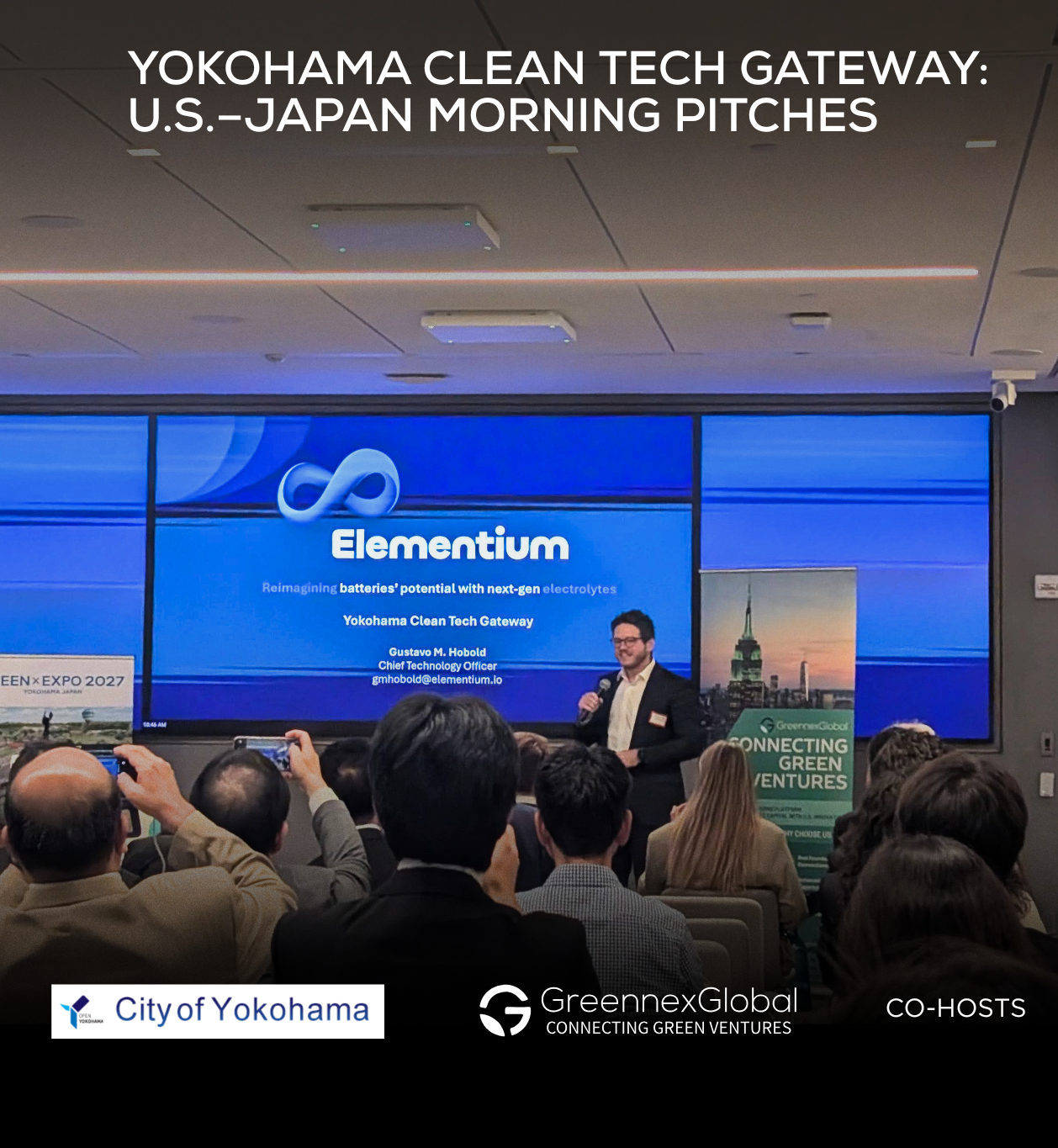
On September 25th, during Climate Week NYC 2026, Greennex Global joined the City of Yokohama’s Global Forum on Circular Economy and Urban Resilience, bringing six US climate tech startups in front of Japanese corporate partners, investors, and ecosystem leaders for a morning that captured exactly what the forum’s theme was built around: how cities, corporations, startups, and investors can function as a unified platform for cross-border climate innovation rather than operating in parallel silos.
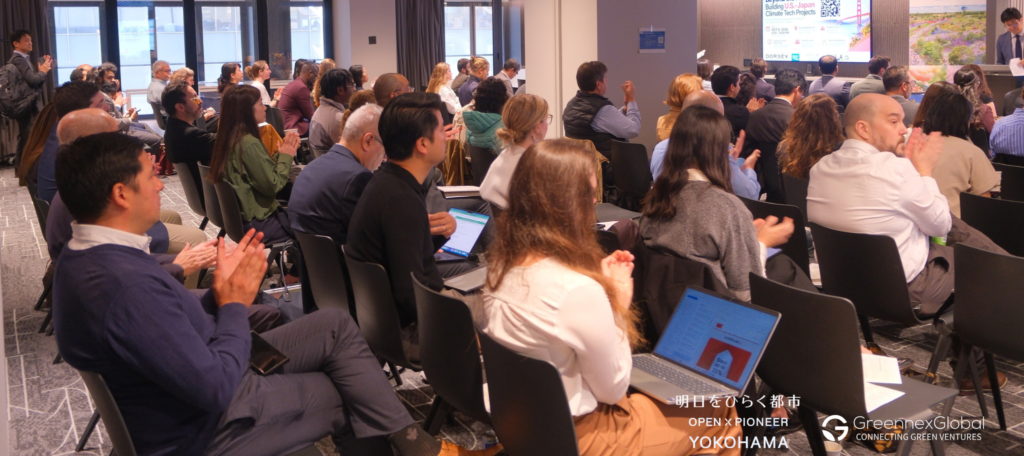
The Global Forum was designed around a straightforward premise that urban challenges at scale require innovation, investment, and international partnership working together, and that cities themselves can be the connective tissue between those three forces. The startup showcase and corporate reverse pitches that Greennex Global anchored during the morning session were a direct expression of that premise in practice: US founders working on the hardest material, infrastructure, and energy challenges, in direct conversation with Japanese corporate operators and investors who have the industrial depth, capital, and policy relationships to take those technologies from pilot to global deployment.
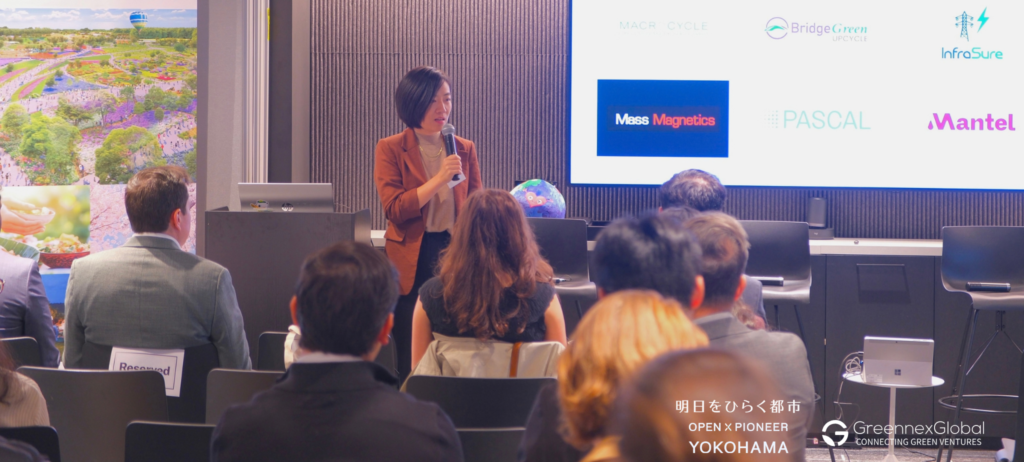
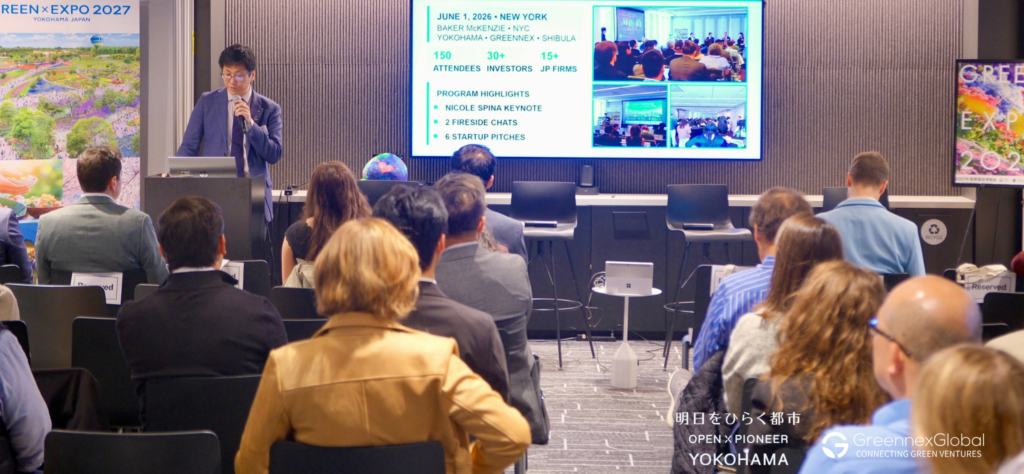
As Masahiro Nishikawa, Chief Representative of the City of Yokohama Office of the Americas, noted in his opening, the City of Yokohama is not trying to build a series of events, but a community where relationships continue and develop over time. The Yokohama Matching Program has already grown from 45 applications in its first cohort to 76 this year, expanded its Japan-US investor network from 50 to more than 120, and produced more than 10 active pilot projects between U.S. startups and Japanese companies. Today’s forum was part of that continuum, not a standalone moment.
Six Startups Working on the Circular Economy’s Hardest Problems
The six companies presenting were selected for their commercial traction, IP depth, and alignment with Japan’s industrial priorities across circular materials, critical minerals, resilient infrastructure, advanced cooling, and carbon capture.
MacroCycle
Circular plastics · Textile waste recycling · Virgin-grade polyester · Zero-carbon materials
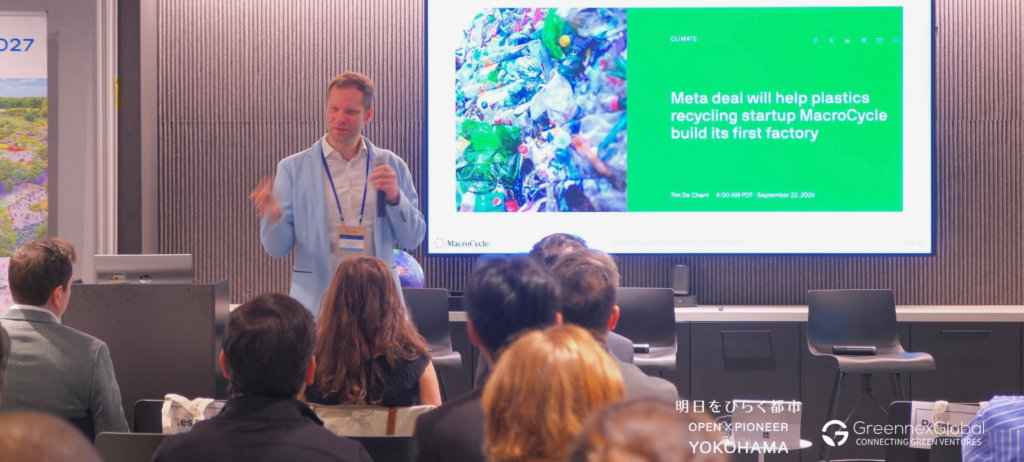
Dr. Jan-Georg Rosenboom, co-founder and CTO of MacroCycle, presented the only non-destructive recycling process capable of producing virgin-grade polyester PET chips from textile waste cost-competitively with oil-based fibers — without breaking the polymer down, which is what makes it cheaper and more feedstock-flexible than every other approach in the space. The process requires 8% less energy than oil-based PET and is already cost-competitive at 50,000 ton per year scale, with a toll manufacturing partnership with Eastman using existing empty vessels for the first production run. A partnership announced during Climate Week with Merer will use carbon credit revenue to bring product pricing down further and accelerate offtake agreements. With polyester supply chains heavily concentrated in Southeast Asia and China, MacroCycle’s technology is deployable wherever textile waste exists and directly addresses the supply chain diversification that Japanese brands and manufacturers are actively seeking.
Bridge Green Upcycle
Battery recycling · Critical minerals · Second-life batteries · Lithium-ion
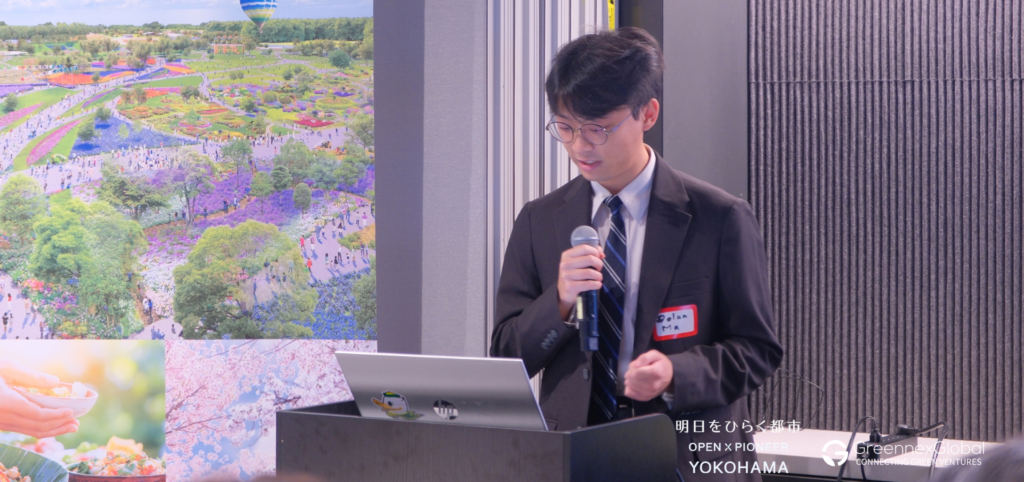
Dolan Ma, Financial Analyst at Bridge Green Upcycle, presented how the company is closing one of the most acute circular economy gaps in advanced manufacturing: less than 10% of US lithium-ion batteries are currently recycled, against heavy import dependence on the critical minerals that power them. The company’s patented LFP recycling process achieves 85% recovery at 65% less carbon emissions than virgin mining, while its AI-enabled state-of-health model repurposes batteries with remaining life into second-life applications for data centers and telecom backup rather than treating them as waste. A modular circularity center in India is operating at 7,200 metric tons per annum, with a signed agreement with Toyota Materials Handling North America and a marketing agreement valued at $500 million to $1 billion over eight years. A $40 million Series A is underway to scale into the US, a trajectory that maps directly onto Japan’s strategic interest in securing allied-nation critical mineral supply chains.
InfraSure
Climate risk · Infrastructure resilience · Parametric insurance · Digital twins
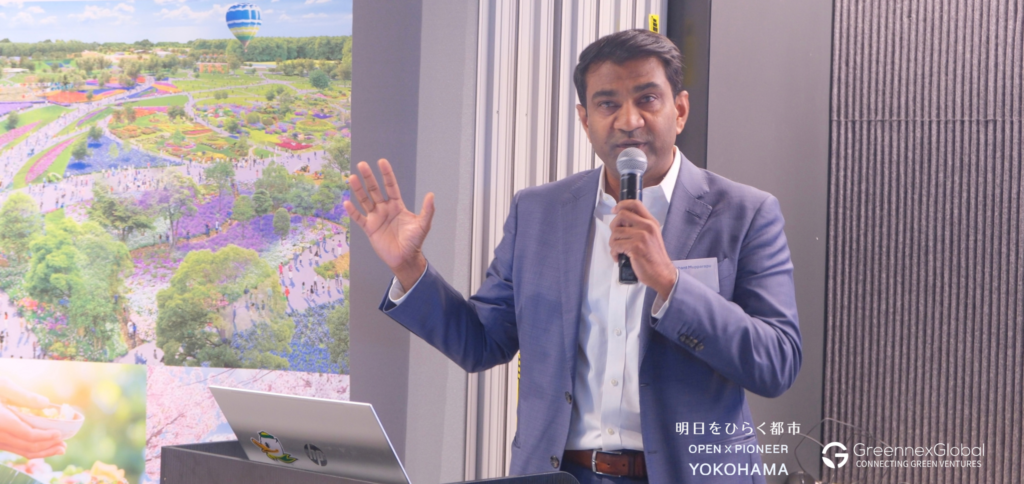
Prashant Mupparapu, Founder and CEO of InfraSure, addressed one of the forum’s most tangible themes being urban resilience, through a lens the industry has largely missed. When a major typhoon strikes, the conversation tends to focus on physical damage, but what makes a city unlivable is the disruption of essential services that extends the crisis and concentrates its impact. InfraSure models exactly this: building probabilistic climate simulation models, digital twins of individual assets, and financial risk frameworks in partnership with Princeton, Columbia, and EPI to give infrastructure owners a clear ROI on physical resilience investments, then covering excess risk with specialty insurance products. Its first product is a parametric power outage policy that pays automatically on a direct utility signal; no claim required. The company won the Decarbonization Prize two days before the forum, and for a city like Yokohama actively managing coastal climate exposure, InfraSure’s model speaks directly to how cities can serve as collaboration platforms across public, private, and financial sectors.
Mass Magnetics
Rare earth magnets · Domestic supply chain · Computer vision · Defense and robotics
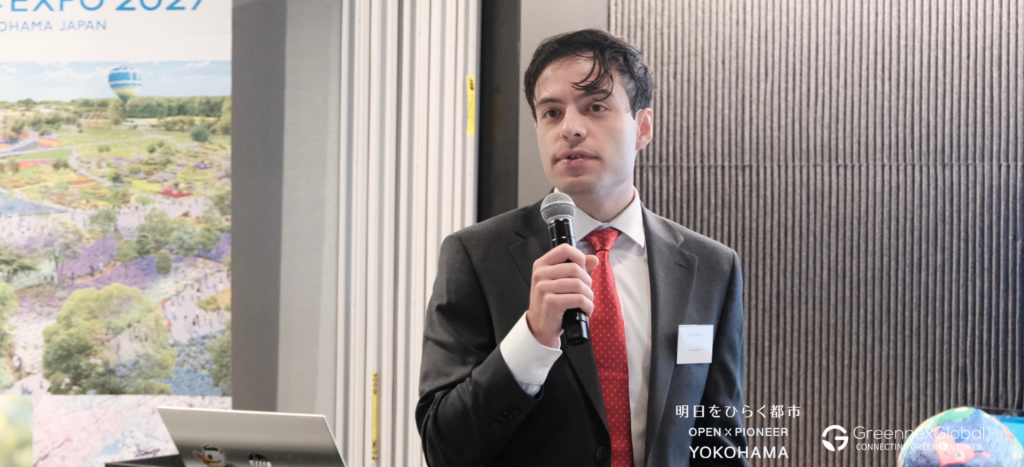
Eric Silver, co-founder of Mass Magnetics and a participant in Yokohama’s matching program, presented a circular economy technology with direct national security urgency: 98% of rare earth magnets used in drones, robots, and electric motors are dependent at some point on Chinese magnetic metallurgy, and a law taking effect January 1, 2027 mandates that motors in advanced technologies must no longer source from China. Mass Magnetics applies computer vision systems trained at MIT’s Metallurgy Lab to automate magnet sorting and sintering domestically, producing compliant material without Chinese supply chain dependency. Three weeks after launching their platform, the company had signed $75,000 in buying agreements with customers paying a premium and depositing 50% upfront. Eric noted directly that Japan’s excellence in adjacent critical mineral spaces — companies like NGK Insulators, Sumitomo Ceramics, and TDK — is something Mass Magnetics is actively looking to learn from and partner on through the Yokohama program.
Pascal Technology
Solid-state cooling · Refrigerant-free · HVAC · Data centers
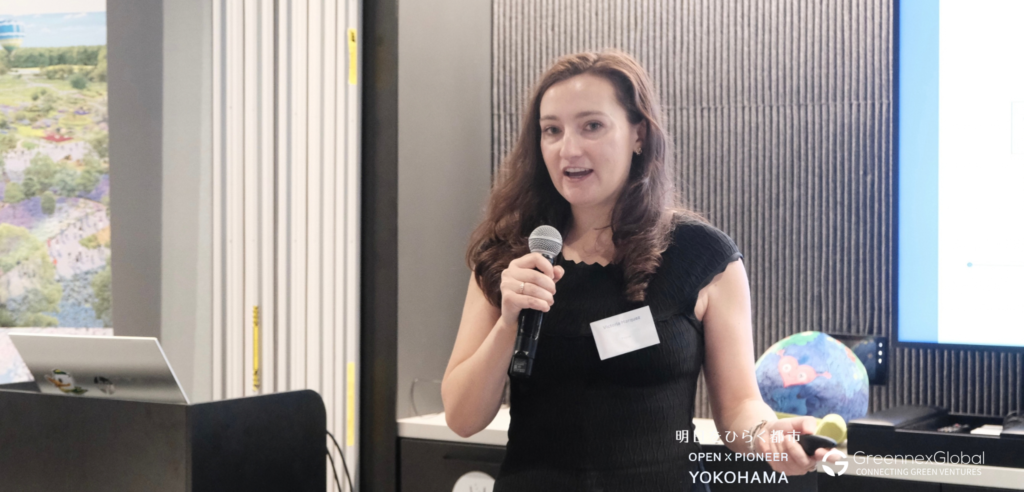
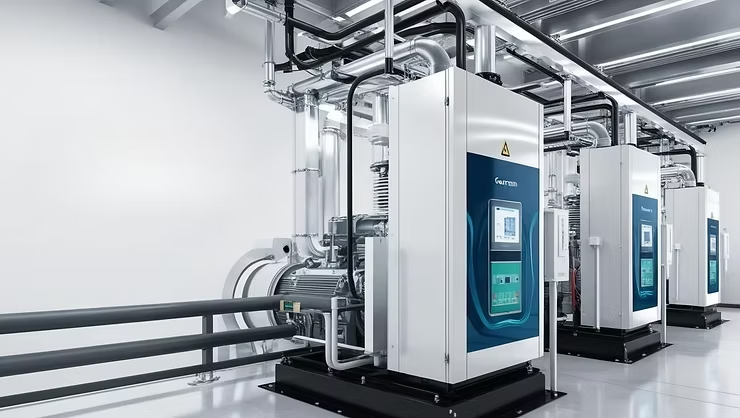
Victoria Marquez presented Pascal Technology’s solid refrigerant heat pump, a first-of-its-kind cooling system that eliminates conventional refrigerants — responsible for nearly 3% of global emissions through leakage and delivers at least 20% greater energy efficiency over vapor compression technology that has improved only 1% per year for two decades. Pascal’s solid is embedded in a standard pipe, pressurized with a small amount of CO₂ gas, and built using up to 80% off-the-shelf components to keep manufacturing costs competitive. The company has completed its first working demo and is co-developing a pilot with a major beverage brand as its entry point before expanding into HVAC, cold chain, and data center cooling. Japan is one of the world’s strictest regulators of conventional refrigerants, making it a natural early deployment market, and Pascal already has manufacturing partnerships in Asia for system components.
Mantel Capture
Carbon capture · Molten salts · Industrial decarbonization · High-temperature chemistry
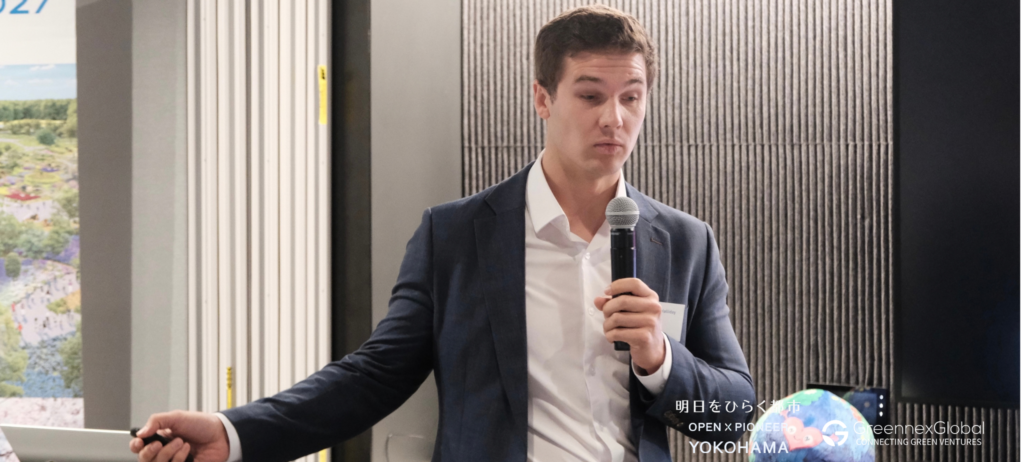
Cameron Halliday, CEO of Mantel Capture, spun out of MIT and backed by Shell, BP, and the Engine, presented a high-temperature carbon capture technology that cuts capture costs roughly in half compared to conventional amine-based systems by using molten salts at approximately 600°C to capture CO₂ and recovering all the energy flowing through the system as high-grade steam, eliminating the energy penalty that has prevented industrial carbon capture from scaling. The company has been running a lab pilot in Boston for three years and recently started operations at a $20 million demonstration project at a pulp and paper mill in Quebec, with more than 100 projects in its commercial pipeline. Japan and Asia are notably absent from that pipeline, and Halliday was direct about looking for regional partners to change that. In a moment that captured the room, when Stella Song noted the company had recently closed its Series A, Halliday corrected her in real time — the round had closed at $50 million that very morning.
Corporate Reverse Pitches: What Japanese Industrial Partners Are Looking For
The corporate reverse pitch session brought five Japanese corporate partners to the front of the room to share their investment mandates and the specific technology categories where they are actively seeking US startup collaborations putting the onus on corporates to articulate where they need help rather than waiting for founders to guess.
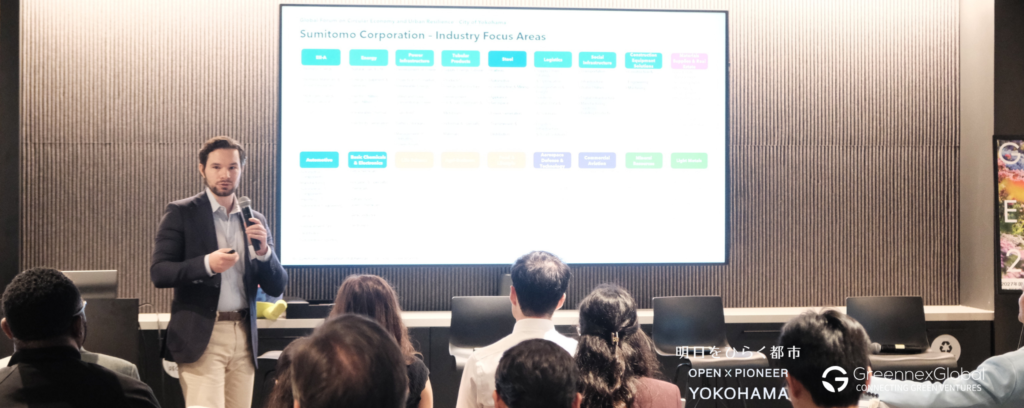
Nick Vega, Director on the Investments and Strategy team at Sumitomo Corporation, introduced one of Japan’s most globally active trading companies, operating across more than 60 countries with approximately $4.5 billion in cash and more than $80 billion in total assets. While highlighting opportunities in the circular economy, energy transition, digital infrastructure, and mobility, he emphasized that Sumitomo invests in and partners with companies across all industries. Sumitomo’s breadth gives it the ability to connect US startups not just with capital but also with the downstream distribution and offtake relationships that can help bring technologies into commercial markets across Asia.
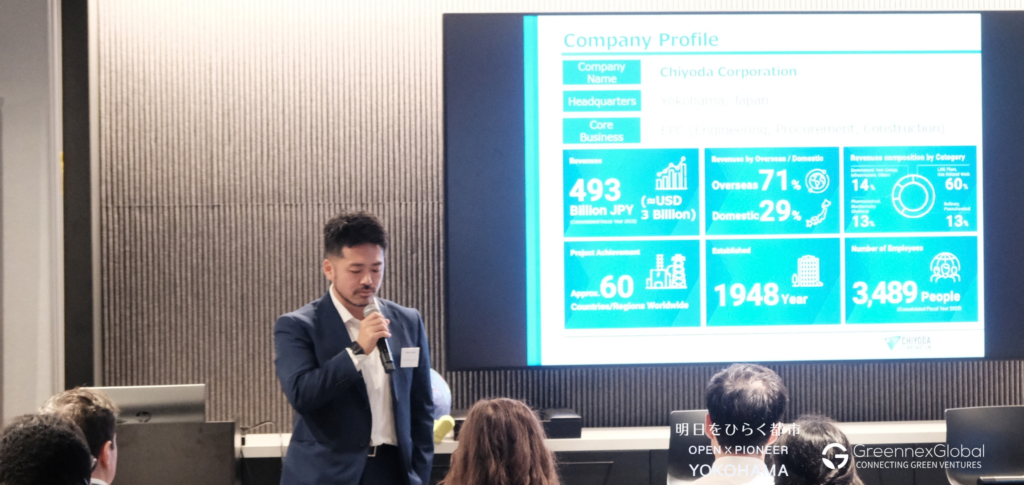
Takeyori Nabeta, Business Development Manager at Chiyoda International Corporation, presented an EPC contractor with $3 billion in annual revenue across 60 countries that is actively expanding beyond construction into social implementation and operational support — recognizing that the commercialization gap between first project and repeatable deployment is where most climate technologies stall. Areas of active interest include energy, industrial AI, metal resources, and data centers, and Chiyoda’s willingness to move into longer-term operational partnerships makes it a different kind of corporate collaborator for startups scaling in US/Japan.
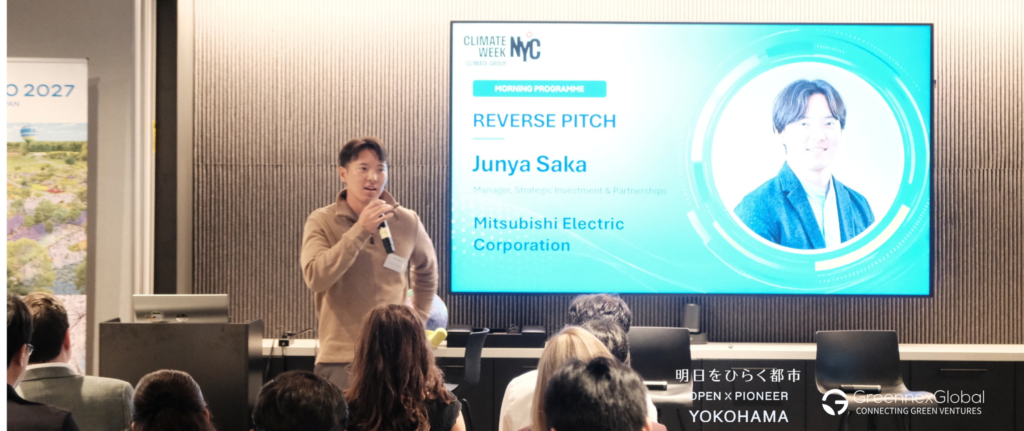
Junya Saka, Manager of Strategic Investment and Partnerships at Mitsubishi Electric, presented the company’s $35 million CVC fund, a familiar face in the Greennex ecosystem from the Global Founder Studio earlier this year focused on the convergence of physical and digital technologies across smart energy, automation, space, and defense. Within the context of a forum on urban resilience and the circular economy, Mitsubishi Electric’s position as a deep industrial hardware company actively seeking AI-enabled digital layers for its existing asset base makes it a natural partner for U.S. startups working at that intersection, particularly in energy infrastructure and building systems.
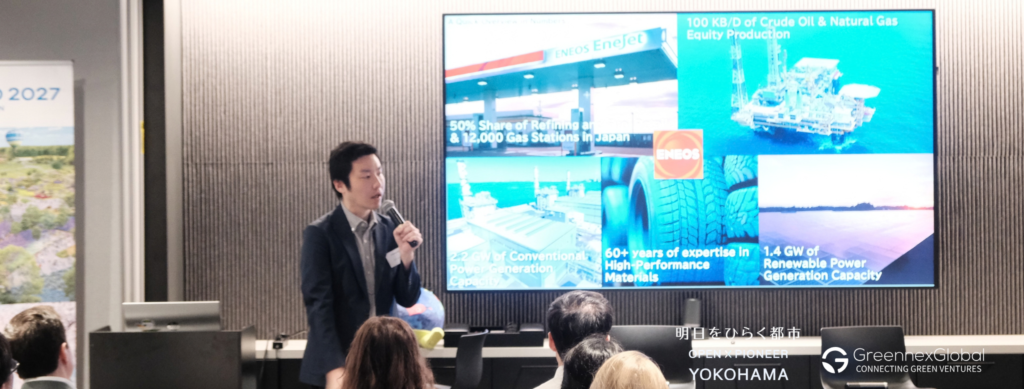
Hirotaka Mori, Principal Researcher and Business Development lead at ENEOS Americas, brought the perspective of Japan’s largest energy company, with 9 refineries, 50% domestic fuel oil market share, and more than 11,000 gas stations. Energy transition and low-carbon infrastructure are among ENEOS’s strategic priorities, while its CVC arm serves as a bridgehead for exploring new markets and businesses, with energy transition as one area of focus. The CVC arm has invested in more than 50 portfolio companies.
Beyond capital, ENEOS could explore ways to support startups through Japanese EPC relationships, joint applications for government support programs, and infrastructure for product transportation, storage, and delivery to customers. For cleantech companies seeking partners to commercialize their technologies internationally, ENEOS could be one potential partner for cross-border commercialization.
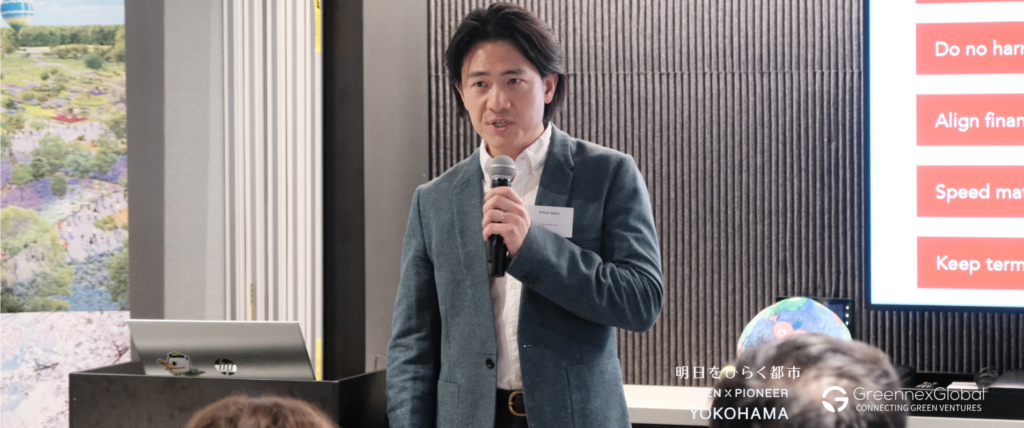
Ethan Sohn, Principal at Toyota Ventures’ Climate Fund, introduced Toyota Ventures, Toyota’s $800 million early-stage venture arm that invests in deep-tech founders building transformative companies in areas such as AI, robotics, energy, climate management, materials, mobility, automation, and industrial systems. Toyota Ventures works closely with Toyota’s internal research institutes and engineering groups to support portfolio companies through commercialization, giving it a hands-on model that goes beyond a financial relationship and into the kind of technical integration that helps hardware and materials startups cross from demonstration to scale.
What the Room Represented
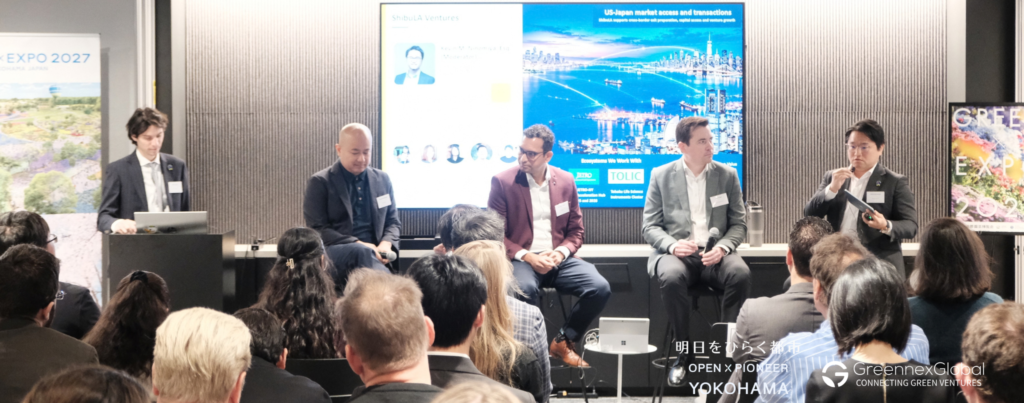
Taken together, the morning at the Global Forum illustrated something that is easy to say in theory and harder to demonstrate in practice: that the circular economy is a systems-level challenge requiring every actor; founders, investors, corporations, and cities to be operating in relation to each other. MacroCycle and Bridge Green Upcycle are closing the material loops in textiles and batteries. Mass Magnetics is building the domestic critical mineral infrastructure that makes advanced manufacturing viable without Chinese dependency. Pascal and Mantel are attacking refrigerant emissions and industrial carbon with first-of-kind technical approaches ready for the pilot-to-scale partnerships that Japanese corporates are uniquely positioned to provide. And InfraSure is building the financial infrastructure that lets cities measure and fund their own resilience rather than absorbing losses after the fact.
The Japanese corporate partners in the room, Sumitomo, Chiyoda, Mitsubishi Electric, ENEOS, and Toyota Ventures represent a combined industrial and capital reach spanning energy, materials, manufacturing, construction, and mobility, each with specific mandates and active pilot pipelines. The forum made those mandates visible to the founders who can address them, and that is what the City of Yokohama’s platform and Greennex Global’s role within it is designed to do.
Startups: Apply to pitch at a Greennex Global Climate Gateway event.
Investors and corporate partners: Contact us at info@greennexglobal.com
Greennex Global is a cross-border venture platform connecting commercially validated U.S. climate and deep tech companies with international corporate operators, institutional investors, and government partners across more than 15 countries. Let’s keep building the bridge between global capital and climate innovation.